Usage And Applications Of Corn Planters: A Key Tool For Modern Agriculture
Usage and Applications of Corn Planters: A Key Tool for Modern Agriculture
As global agriculture continues to evolve, traditional farming practices are gradually being replaced by more efficient and precise mechanized operations. In this transition, the corn planter, as one of the most important agricultural machines, plays a crucial role. By partnering with tractors, corn planters significantly enhance planting efficiency, reduce labor costs, and improve planting precision, ensuring corn grows under optimal conditions. This article explores the usage and applications of corn planters, highlighting their versatility and value in various farming scenarios.
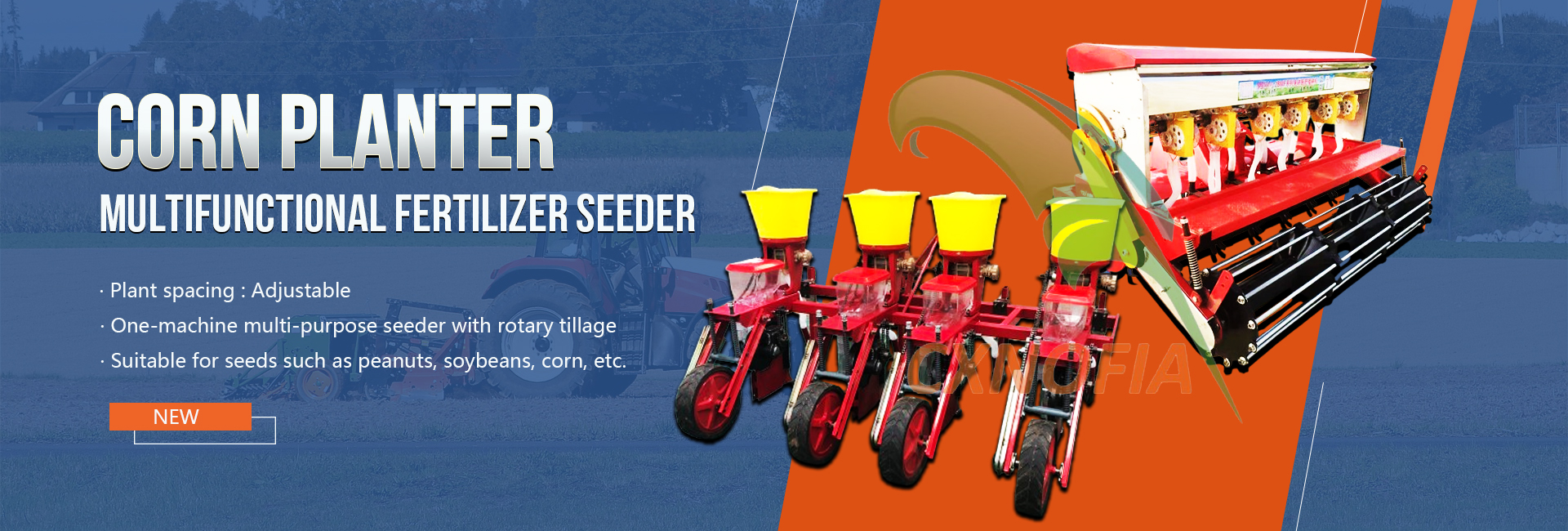
Working Principle and Functions of a Corn Planter
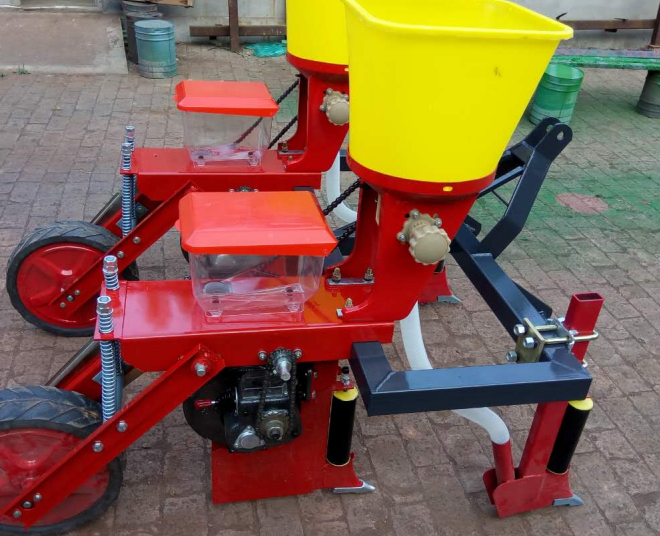
The primary function of a corn planter is to mechanically plant corn seeds. It is typically connected to a tractor, using the tractor’s power to drive the planting mechanism, enabling rapid planting over large areas of farmland. A corn planter generally consists of several components, including a seed hopper, seed metering units, fertilizer applicators, and adjustment systems. By adjusting parameters such as planting depth, row spacing, and seeding rate, the machine ensures that corn seeds are evenly and accurately placed in the soil.
The main advantages of the corn planter lie in its efficiency and precision. Traditional manual planting is limited by human capabilities, which affect the speed and accuracy of seed placement. In contrast, the corn planter uses mechanical control and intelligent systems to quickly cover large areas while ensuring consistent planting depth and spacing. Additionally, some corn planters are equipped with integrated fertilizer applicators that apply nutrients simultaneously with seeding, promoting optimal growth for the crop.
Application Scenario 1: Efficient Planting on Flat Farmland
Flat farmland is one of the most common scenarios for using corn planters. In this setting, the planter can operate at full capacity, quickly and precisely completing the planting task. Since the terrain is level, the corn planter requires little adjustment to its settings and can operate smoothly without major modifications.
On flat farmland, the planter’s benefits are fully realized in large-scale planting areas. The machine significantly increases planting efficiency, reduces labor input, and ensures planting quality. It is an ideal solution for increasing crop yields while reducing operational costs.
Application Scenario 2: Precision Planting in Hilly Terrain
Hilly terrain presents unique challenges for traditional planting methods, particularly because of the slope. These challenges can lead to uneven seed placement, inconsistent planting depth, and inefficient use of resources. The introduction of corn planters addresses these issues. Many modern corn planters are designed with adjustable planting depth and row spacing, which allows them to adapt to the terrain's variation.
In hilly areas, the precision planting capabilities of the corn planter are especially important. The planter ensures consistent planting depth across slopes, preventing uneven seed distribution caused by the incline. Additionally, the integrated fertilizer application system ensures that nutrients are delivered accurately, minimizing waste and optimizing the conditions for corn growth.
Application Scenario 3: Water-Conserving Planting in Arid Regions
In arid regions, water scarcity often limits agricultural productivity. Corn, being a water-intensive crop, faces particular challenges in these areas. To address this, many modern corn planters are equipped with water-conserving technologies. These planters are designed to ensure that seeds are placed at the correct depth, and the surrounding soil retains moisture, allowing for better germination even in dry conditions.
Water-conserving technologies make corn planters particularly suitable for planting in arid environments, where they can enhance crop yield without relying heavily on irrigation. By minimizing water usage and ensuring optimal seed placement, these planters offer a sustainable solution for farming in water-limited areas.
Application Scenario 4: Intelligent Planting in Diverse Soil Conditions
Soil types can vary significantly from one region to another, with some soils being hard and others too loose. These variations can affect the planting depth and uniformity of seed placement, making traditional planting methods ineffective. Corn planters, however, can handle diverse soil conditions thanks to their intelligent monitoring and adjustment systems. These systems enable the planter to measure soil conditions in real-time and automatically adjust planting depth, speed, and fertilizer application based on soil characteristics.
The ability to adapt to different soil types is one of the key advantages of corn planters. In regions with complex soil conditions, the planter ensures precise seed placement and consistent planting quality, even in difficult-to-manage soils. This results in better germination rates and more uniform crop growth.
Application Scenario 5: Large-Scale Commercial Planting
With the increasing trend of large-scale commercial farming, corn planters have become indispensable in extensive agricultural operations. In large-scale planting areas, the planter’s ability to cover vast stretches of land quickly is vital. It ensures that planting is completed in a timely manner, reducing labor costs while maintaining high planting standards.
In commercial farming, corn planters not only improve planting efficiency but also integrate well with other agricultural machinery, forming a complete mechanized farming system. This integration allows farmers to manage their land more effectively, ultimately increasing yields and maximizing economic returns. The use of corn planters in large-scale farming operations contributes to the overall advancement of agricultural productivity and the modernization of farming practices.
Conclusion
Corn planters have proven to be an essential tool in modern agriculture, demonstrating their versatility and effectiveness across various farming scenarios. From flat farmland to hilly terrain, from arid regions to diverse soil types, corn planters adapt to different conditions, offering a highly efficient and sustainable solution for large-scale planting. Their precision, coupled with intelligent systems for depth adjustment and fertilizer application, ensures optimal growth conditions for corn, leading to higher yields and better crop quality.
As agricultural technology continues to advance, corn planters will play an increasingly prominent role in shaping the future of farming. By enabling farmers to plant more efficiently, conserve resources, and adapt to changing environmental conditions, corn planters are helping to drive agricultural modernization and contribute to the sustainability of global food production.
CXNOFIA is a well-known tractor parts & implements supplier in China. Complete product range, quality guaranteed. Welcome to consult at any time!
What Is A Tractor Spares Steering Controller?
Turbochargers: Powering Cars, Tractors, and Harvesters for a New Era
Related Article