Are Harvester Drive Wheels Suitable For Rough Terrain?
In the world of modern agriculture, harvesting equipment must perform reliably in a wide range of field conditions — from flat, dry plains to muddy, rocky, and uneven terrain. One of the most critical components influencing a harvester's mobility is the harvester drive wheel. But are these wheels truly suitable for rough terrain?
The Role of Harvester Drive Wheels
Harvester drive wheels are responsible for providing forward motion to the machine by transferring engine power to the ground. In many traditional combine harvesters, especially those used in temperate or relatively flat regions, standard drive wheels are sufficient for daily operations. These wheels typically feature deep treads or lugs designed to grip soil surfaces and reduce slippage during operation.
However, when it comes to rough terrain, such as steep slopes, rocky fields, or muddy conditions, standard drive wheels may struggle to maintain consistent traction and stability. This limitation raises an important question: Are conventional harvester drive wheels truly suitable for all types of terrain?
Limitations of Standard Drive Wheels in Rough Conditions
While effective in ideal conditions, standard harvester drive wheels have several limitations when operating on uneven or unstable surfaces:
Reduced Traction : Smooth or lightly treaded wheels can slip easily in muddy or loose soil.
Increased Wear : Constant contact with sharp rocks or debris accelerates wear on tires or wheel rims.
Weight Distribution Issues : Uneven terrain can cause imbalance, leading to premature failure of bearings and axles.
Limited Ground Clearance : Low profile wheels may get stuck or damaged in rocky or uneven fields.
These issues can lead to frequent breakdowns, increased maintenance costs, and reduced operational efficiency — particularly for farmers working in remote or rugged areas.
Exploring Driving Chain Wheels as an Alternative
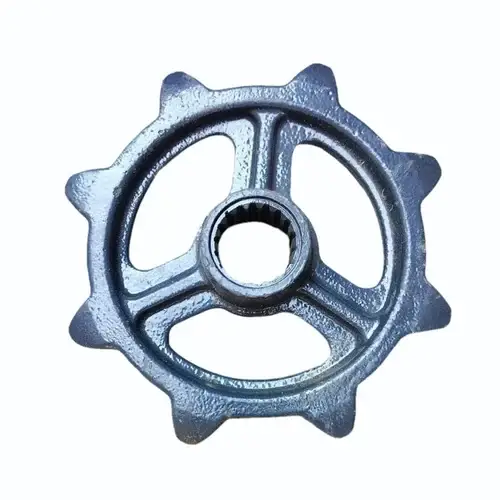
To overcome the challenges posed by rough terrain, many agricultural engineers and operators are turning to driving chain wheels as an alternative or complementary solution. Unlike standard rubber tired or solid metal wheels, driving chain wheels operate using a tracked system that distributes weight more evenly across the ground surface.
This design offers several advantages:
Superior Traction : The continuous track provides better grip, even in wet or muddy conditions.
Even Weight Distribution : Reduces pressure on any single point of contact, minimizing soil compaction and improving stability.
Enhanced Durability : Metal tracks are more resistant to punctures and abrasions than rubber tires.
Better Maneuverability : Tracked systems allow for tighter turns and smoother movement over obstacles.
Driving chain wheels are often integrated into specialized combine harvester parts, particularly those designed for use in mountainous or off-road farming zones.
How Combine Harvester Parts Work Together in Challenging Environments
The performance of a harvester in rough terrain isn't solely dependent on its drive system. It involves the coordination of multiple parts of a combine harvester , including:
Cutting Platform : Must be adjustable to follow the contour of uneven land.
Hydraulic System : Controls elevation and leveling of various components.
Undercarriage Components : Including idlers, rollers, and sprockets, especially in tracked models.
Engine and Transmission : Must deliver consistent torque without overheating or stalling.
When selecting replacement parts or upgrading machinery, it's essential to consider how each component interacts with the others. For example, switching to driving chain wheels may require modifications to the transmission or hydraulic support system to ensure optimal performance.
Maintenance Considerations for Drive Wheels and Track Systems
Whether you're using standard harvester drive wheels or upgraded driving chain wheels , regular maintenance is crucial to prolonging the lifespan of your equipment. Key practices include:
Lubrication of Bearings and Joints
Inspection for Cracks, Bends, or Excessive Wear
Cleaning After Each Use to Remove Debris and Moisture
Checking Alignment and Tire Pressure (for Rubber-Tired Models)
Operators should also keep detailed service records and replace worn-out combine harvester parts before they cause more serious mechanical failures.
Adapting Harvesters for Specific Terrains
Farmers and equipment technicians often modify harvesters based on the type of terrain they expect to encounter. Some common adaptations include:
Upgrading to Wider or Dual Wheels – Increases stability and reduces sinkage in soft soils.
Adding Tracks or Driving Chain Wheels – Offers better grip and weight distribution.
Installing Reinforced Axles and Bearings – Helps withstand additional stress from rough terrain.
Using High Strength Materials – Such as hardened steel or composite alloys for wear-prone parts.
These modifications help ensure that the entire system, including parts of a combine harvester , functions efficiently regardless of environmental challenges.
When to Upgrade from Drive Wheels to Driving Chain Wheels
Deciding whether to upgrade from traditional harvester drive wheels to driving chain wheels depends on several factors:
Field Topography : If you frequently work on slopes, rocky land, or swampy areas, tracked systems offer better performance.
Crop Type and Soil Condition : Certain crops like rice or sugarcane are grown in wetter, muddier fields where traction becomes critical.
Operational Demands : High intensity harvesting operations benefit from more durable and stable drive systems.
Cost vs. Benefit Analysis : While initial investment in tracked systems is higher, long-term savings in maintenance and downtime can justify the switch.
Consulting with experienced technicians or reviewing case studies from similar farming operations can help determine whether a change in drive system is right for your needs.
In conclusion, while harvester drive wheels are suitable for many agricultural applications, they may not be the best option for consistently rough or uneven terrain. Operators facing such conditions should consider alternatives like driving chain wheels, which provide enhanced traction, durability, and overall performance.
Understanding how different combine harvester parts interact — from cutting mechanisms to undercarriage systems — allows farmers and technicians to make informed decisions about equipment upgrades and maintenance strategies.
Ultimately, choosing the right drive system involves evaluating terrain type, operational requirements, and long-term sustainability. Whether you stick with traditional drive wheels or adopt a tracked system, ensuring compatibility among all parts of a combine harvester is key to maximizing productivity and reducing mechanical failures.
Discover our WD.4MC.2-01C driving chain wheels designed specifically for harvester. Produced by CXNOFIA—one of an experienced and reliable Chinese combine harvester parts suppliers — this durable parts of a combine harvester offers excellent performance and long term reliability. Enjoy cost effective pricing, quick global shipping, easy return options, and access to exclusive time limited promotions. Experience the quality and dependability of CXNOFIA today.
Is It Safe to Use Aftermarket Track Rollers?
Micro Tiller or Walk-Behind Tractor? A Practical Guide for Small Farmers Worldwide
Related Article