Can You Add an Additional Radiator to a Tractor?
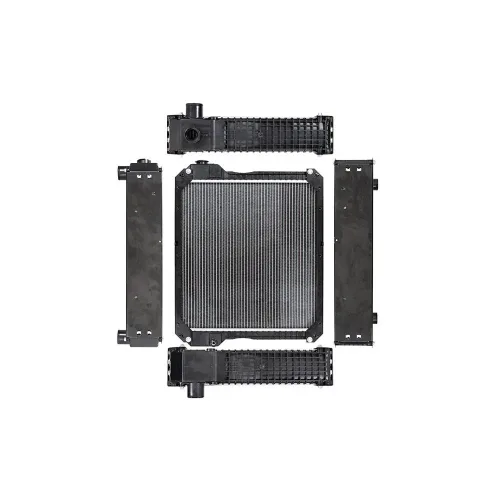
When summer heatwaves strike or your tractor is pushed beyond its normal workload—whether hauling heavy implements, operating in dusty fields, or running auxiliary hydraulics—the question inevitably arises: ‘Can you add an additional radiator to a tractor?’ It's not just a theoretical curiosity. For many operators, overheating engines are a costly reality that leads to downtime, warped heads, blown gaskets, and even total engine failure. But before bolting on extra cooling hardware, it's essential to understand the engineering realities, practical limitations, and smart alternatives.
Why Adding a Second Radiator Isn't Always the Answer
The idea of installing an additional radiator sounds logical: more surface area equals more heat dissipation. In custom-built hot rods or industrial machinery with modular cooling loops, this approach often works. But tractors? Not so straightforward.
Tractors operate in environments where airflow is already compromised. Dust, chaff, mud, and crop residue cling to grilles and fins, reducing efficiency even on stock systems. Adding another radiator multiplies this problem. Unless you're prepared to install dedicated electric fans, re-route coolant lines across the chassis, fabricate mounting brackets, and ensure proper thermostat and water pump compatibility, you're likely creating more problems than you're solving.
Moreover, most OEM tractor cooling systems are engineered as closed, balanced loops. The water pump's flow rate, hose diameters, thermostat opening points, and radiator core volume are all calibrated to work together. Introducing an aftermarket tractor radiator into the loop—even as a secondary unit—can disrupt pressure balance, cause cavitation, or lead to uneven coolant distribution. The result? Hot spots in the engine block or inefficient heat transfer despite the ‘extra’ cooling surface.
Instead of asking ‘Can you add an additional radiator to a tractor?’, ask: ‘Is my current radiator performing at its full potential?’
The Hidden Value of High Performance Aftermarket Tractor Radiators
Many operators assume their radiator is ‘fine’ until steam starts billowing from the hood. But age, corrosion, internal clogging, and fin damage silently degrade performance over time. A 10-year-old radiator may only be operating at 60–70% of its original capacity—even if it doesn't visibly leak.
This is where premium aftermarket tractor radiators, like the CXNOFIA SJ11553 model designed for John Deere applications, shine. Rather than jury rigging a second unit, replacing your worn core with a high efficiency, direct fit replacement restores—and sometimes exceeds—factory cooling specs. These units often feature:
Multi row aluminum cores for maximum heat exchange
Reinforced plastic or brass tanks for durability
Optimized fin density to balance airflow and debris resistance
OE-spec hose connections and mounting points for drop-in installation
Unlike universal ‘add-on’ radiators, purpose-built replacements like the SJ11553 are engineered to match the thermal load, flow rate, and physical constraints of specific tractor models. No guesswork. No custom plumbing. Just reliable, predictable cooling under load.
When Does Adding a Radiator Make Sense?
There are rare—but valid—scenarios where adding a supplemental radiator is justified:
High-HP Engine Swaps: If you've upgraded from a 90HP to a 150HP engine in an older tractor chassis, the stock radiator may simply be undersized.
PTO-Intensive Implements: Running high-load equipment like large balers, forage harvesters, or hydraulic log splitters for hours on end generates excess heat that the primary radiator wasn't designed to handle.
Extreme Climate Operations: Desert farming or tropical sugarcane operations push thermal limits beyond standard design parameters.
In these cases, professionals often install an auxiliary transmission or hydraulic oil cooler first—since those fluids contribute significantly to overall thermal load. Only after optimizing those systems should you consider adding a secondary engine coolant radiator. And even then, it should be part of a professionally engineered package that includes upgraded pumps, thermostatic controls, and ducted airflow.
Maintenance & Upgrades: Smarter Than Adding Hardware
Before spending hundreds—or thousands—on auxiliary cooling hardware, perform these checks:
Flush the entire cooling system to remove scale and sediment buildup.
Replace the thermostat with a high flow unit rated for your engine's optimal temperature.
Upgrade to a heavy duty fan clutch or electric puller fan for improved low RPM cooling.
Inspect and clean the radiator fins regularly; bent or clogged fins reduce efficiency by up to 40%.
Ensure shrouds and seals around the radiator are intact to force air through the core—not around it.
Often, these simple steps restore adequate cooling without any structural modifications. And if your radiator is beyond cleaning or repair? That's the perfect moment to invest in a quality aftermarket tractor radiator like the SJ11553, which offers factory fitment with enhanced materials and modern manufacturing tolerances.
Choosing the Right Replacement: What to Look For
Not all radiators for tractors are created equal. When selecting an aftermarket unit, prioritize:
Exact OEM part number compatibility (e.g., SJ11553 for certain John Deere models)
Core material (aluminum cores dissipate heat faster than copper/brass and resist corrosion better)
Tank construction (reinforced nylon or brass resists cracking from vibration and thermal cycling)
Pressure testing certification (ensures no hidden leaks or weak seams)
Warranty and technical support from the manufacturer
CXNOFIA, for example, specializes in precision-engineered replacement parts for agricultural machinery, including radiators for tractors that meet or exceed original specifications. Their focus on compatibility, durability, and thermal efficiency makes them a reliable source for operators who want to avoid downtime—not create more complexity.
Solve the Root Cause, Not the Symptom
So, can you add an additional radiator to a tractor? Technically, yes—with enough fabrication skill, budget, and engineering know how. But practically? It's rarely the most efficient, cost effective, or reliable solution.
Instead of layering on hardware, diagnose why your tractor is overheating. More often than not, the culprit is a degraded radiator for tractor, clogged system, or insufficient airflow—not inadequate radiator surface area. Replacing your aging core with a high performance aftermarket tractor radiator restores balance to your cooling system and gets you back in the field faster—with fewer headaches.
Whether you're maintaining a fleet of tractors or keeping a single workhorse running through harvest season, smart upgrades beat brute force modifications every time. Choose precision. Choose compatibility. Choose reliability.
Explore high quality aftermarket tractor radiators from CXNOFIA, a trusted radiator for tractor manufacturer in China. Our precision engineered radiators for tractors are designed for durability and compatible with a wide range of leading tractor brands. Contact us now: sales@cxnofia.com
How Hot Does a Tractor Radiator Get?
How Do I Know If My Radiator Is Bad?
Related Article