Navigating China's Agricultural PTO Gearbox Manufacturing Landscape
2026-03-05
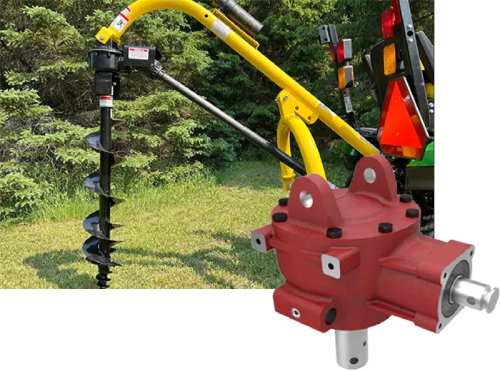
Global agricultural equipment manufacturers face complex sourcing decisions when evaluating Chinese agricultural gearbox suppliers for power take-off transmission components. Beyond basic price comparisons, informed B2B procurement requires understanding material science fundamentals, precision manufacturing capabilities, and application-specific engineering considerations that determine long-term field reliability. This technical guide examines critical evaluation criteria for agricultural pto gearbox suppliers while clarifying functional distinctions between gearbox types, manufacturing quality indicators, and strategic partnership selection frameworks—all grounded in mechanical engineering principles rather than promotional content.
Functional Architecture of Agricultural PTO Gearbox Systems – Input Specifications and Output Requirements
Agricultural pto gearbox performance depends fundamentally on precise matching between tractor power characteristics and implement operational demands.
Standard PTO input speeds operate at 540 RPM or 1000 RPM with 1-3/8 inch six-spline shafts conforming to ISO 500 specifications, requiring gearbox input shafts with exact dimensional tolerances to prevent spline wear under cyclic loading.
Gear ratio selection directly impacts implement performance—rotary tillers typically require 1:1.5 to 1:2.5 step-up ratios converting tractor PTO speed to optimal tine rotation velocities between 220-280 RPM for effective soil fragmentation.
Torque transmission capacity must exceed maximum implement load requirements by 25-30% safety margin to accommodate transient shock loads during rock encounters or dense residue conditions without gear tooth failure.
Housing material selection balances weight and durability—HT250 gray cast iron provides optimal vibration damping characteristics while resisting deformation under thermal cycling during extended field operations.
Sealing system integrity proves critical for agricultural environments—triple-lip seal configurations with labyrinth chambers prevent soil particle ingress that accelerates bearing wear in dusty field conditions.
Output shaft configurations vary by implement type—solid shafts suit direct-drive applications like rotary tillers while hollow shafts accommodate hydraulic pump integration for sprayer or fertilizer applicator systems.
Thermal management considerations influence sustained operation—gearbox oil capacity and finned housing designs dissipate heat generated during continuous high-torque transmission preventing lubricant breakdown.
Vibration analysis during prototype testing identifies gear mesh imperfections—amplitude exceeding 4.5 mm/s RMS indicates manufacturing defects requiring corrective action before production release.
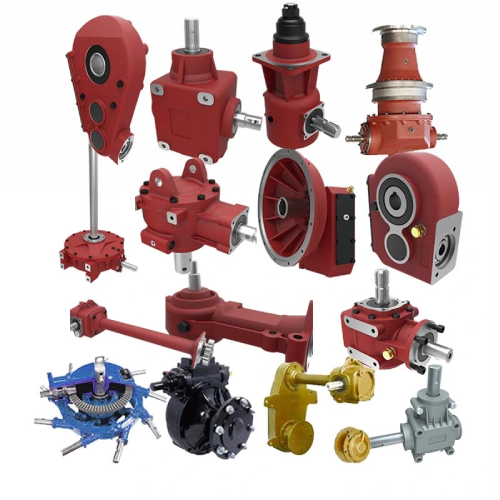
Application specific engineering distinguishes premium suppliers—specialized manufacturers develop implement-optimized gearboxes like those for tractor beaters and rotary tillers featuring reinforced bearing supports and optimized gear tooth profiles.
Material Science and Precision Manufacturing Protocols for Agricultural Gearbox Durability
Component longevity in agricultural gearbox applications depends on metallurgical precision and controlled manufacturing processes rather than nominal specifications alone.
Gear blank material selection typically employs 20CrMnTi alloy steel for its exceptional case hardening response—carburizing processes achieve 58-62 HRC surface hardness while maintaining 30-35 HRC core toughness to resist impact fracture.
Tooth profile grinding after heat treatment ensures AGMA Q8 or DIN 6 accuracy class—deviations exceeding 0.02mm cause uneven load distribution accelerating pitting fatigue on gear flanks during cyclic operation.
Bearing bore machining tolerances maintain H7/g6 fits ensuring proper interference for outer race retention while preventing housing distortion under operational loads.
Shot peening surface treatments on gear teeth induce compressive residual stresses increasing fatigue life by 40-60% compared to non-peened components under identical loading conditions.
Lubrication system design considers operational orientation—gearboxes operating at extreme angles require baffled oil reservoirs preventing oil starvation during slope navigation.
Quality control protocols include magnetic particle inspection for subsurface cracks in critical components and gear backlash verification within 0.15-0.25mm specifications preventing excessive noise and wear.
Heat treatment atmosphere control prevents decarburization—carbon potential monitoring during carburizing maintains consistent case depth critical for tooth root strength under bending loads.
Vibration testing under simulated field loads identifies resonance frequencies—gearbox designs exhibiting natural frequencies within 15% of operational RPM ranges require structural reinforcement to prevent fatigue cracking.
Specialized manufacturers like CXNOFIA implement multi-stage quality verification for agricultural pto gearbox components including dimensional validation, material certification, and functional endurance testing before shipment to international markets.
Traceability systems linking heat treatment batches to finished components enable root cause analysis during field failure investigations—premium suppliers maintain full material pedigree documentation throughout production cycles.
Evaluating Agricultural Gearbox Suppliers – Technical Capabilities Versus Commercial Promises
Distinguishing capable agricultural gearbox suppliers requires systematic evaluation beyond catalog specifications and price quotations.
CNC machining capability verification should include inspection of five-axis machining centers capable of complex helical gear profiles—suppliers relying solely on conventional hobbing equipment cannot achieve precision required for quiet, durable operation.
In-house heat treatment facilities indicate process control commitment—outsourced heat treatment introduces variability in case depth and hardness distribution affecting component reliability.
Prototype development timelines reveal engineering competence—suppliers delivering functional prototypes within 45 days demonstrate robust design validation processes versus those requiring multiple iterations extending beyond 90 days.
Material certification protocols should provide mill test reports for every production batch verifying chemical composition against ASTM or GB standards—reputable suppliers maintain material traceability from raw stock through finished components.
Testing infrastructure assessment proves critical—suppliers possessing dynamometer test stands capable of 150% overload testing validate durability claims versus those relying solely on theoretical calculations.
Quality management system certification requires verification beyond certificate display—auditing actual production floor implementation of ISO 9001 procedures reveals genuine quality culture versus documentation-only compliance.
Technical documentation quality reflects engineering rigor—comprehensive installation manuals including torque specifications, lubrication requirements, and failure mode analysis demonstrate supplier expertise versus minimal documentation.
Application engineering support accessibility matters significantly—suppliers providing implement-specific gearbox selection guidance based on power requirements and operational parameters deliver superior partnership value.
Export experience with target markets indicates regulatory understanding—suppliers regularly shipping to European or North American markets navigate CE marking requirements and liability insurance expectations essential for international distribution.
After-sales technical support infrastructure including failure analysis capabilities reduces buyer risk—suppliers investing in metallurgical laboratories for field failure investigation demonstrate long-term partnership commitment.
Strategic Sourcing Frameworks for Agricultural PTO Gearbox Components in Global Supply Chains
Optimal procurement strategies balance initial acquisition costs against total lifecycle expenses including downtime, warranty claims, and replacement frequency.
Total cost of ownership analysis should quantify field failure rates—gearboxes failing before 1,500 operating hours generate replacement costs and downtime expenses exceeding 300% of initial acquisition price despite lower purchase cost.
Supplier diversification strategies mitigate supply chain risk—maintaining qualified secondary sources for critical agricultural gearbox components prevents production stoppages during primary supplier capacity constraints.
Sample validation protocols require minimum 200-hour endurance testing under simulated field loads before production commitment—accelerated life testing identifies latent defects invisible during visual inspection.
Payment terms should align with quality verification milestones—retaining 15-20% payment until field validation completes provides financial incentive for suppliers maintaining consistent quality standards.
Intellectual property protection considerations matter for custom designs—suppliers signing mutually enforceable non-disclosure agreements and design ownership contracts protect buyer investment in application-specific engineering.
Logistics integration capabilities influence landed costs—suppliers offering consolidated shipping with other agricultural components reduce per-unit freight expenses significantly for high volume programs.
Currency fluctuation hedging strategies protect against pricing volatility—long-term agreements with fixed pricing in buyer's currency or indexed adjustment formulas provide budget predictability.
Technical evolution tracking proves valuable—suppliers investing in R&D for improved sealing systems or lightweight housing designs deliver ongoing value beyond initial component supply relationship.
Industry specialization delivers application expertise—manufacturers focused exclusively on agricultural pto gearbox development understand implement-specific requirements versus general industrial gearbox producers adapting designs for agricultural use.
Partnership maturity indicators include co-engineering projects—suppliers collaborating on next-generation implement designs demonstrate commitment beyond transactional component supply relationships.
Frequently Asked Questions
What distinguishes premium agricultural gearbox suppliers from commodity manufacturers?
Premium suppliers maintain in-house heat treatment capabilities, implement multi-stage quality verification including dynamometer testing, provide material certification for every batch, and offer application engineering support versus commodity manufacturers focusing solely on price competition with minimal quality controls.
How do 540 RPM versus 1000 RPM PTO inputs affect agricultural gearbox selection?
Gearbox input shafts must match tractor PTO specifications—540 RPM systems typically drive heavier implements requiring higher torque multiplication while 1000 RPM inputs suit high-speed applications like rotary tillers requiring step-up ratios for optimal implement speed.
What material specifications ensure agricultural pto gearbox durability in dusty field conditions?
HT250 cast iron housings with triple-lip sealing systems prevent contaminant ingress while 20CrMnTi alloy steel gears with carburized surfaces (58-62 HRC) resist wear under cyclic loading—suppliers providing material certification documentation verify these critical specifications.
Why do some agricultural gearbox suppliers offer significantly lower prices than competitors?
Price differentials often reflect material substitutions (lower-grade cast iron), outsourced heat treatment introducing variability, minimal quality inspection protocols, or absence of endurance testing—these compromises manifest as premature field failures increasing total ownership costs despite lower acquisition price.
How frequently should agricultural gearbox lubrication be serviced under normal field conditions?
Initial oil change after first 50 operating hours removes manufacturing debris, followed by 250-hour intervals under normal conditions or 150-hour intervals in extremely dusty environments—using GL-5 80W-90 gear oil meeting API specifications ensures proper wear protection.
Universal Gearbox Systems in Modern Agriculture
How Serious Is a Front Axle Plug Cap Leak?
Related Article
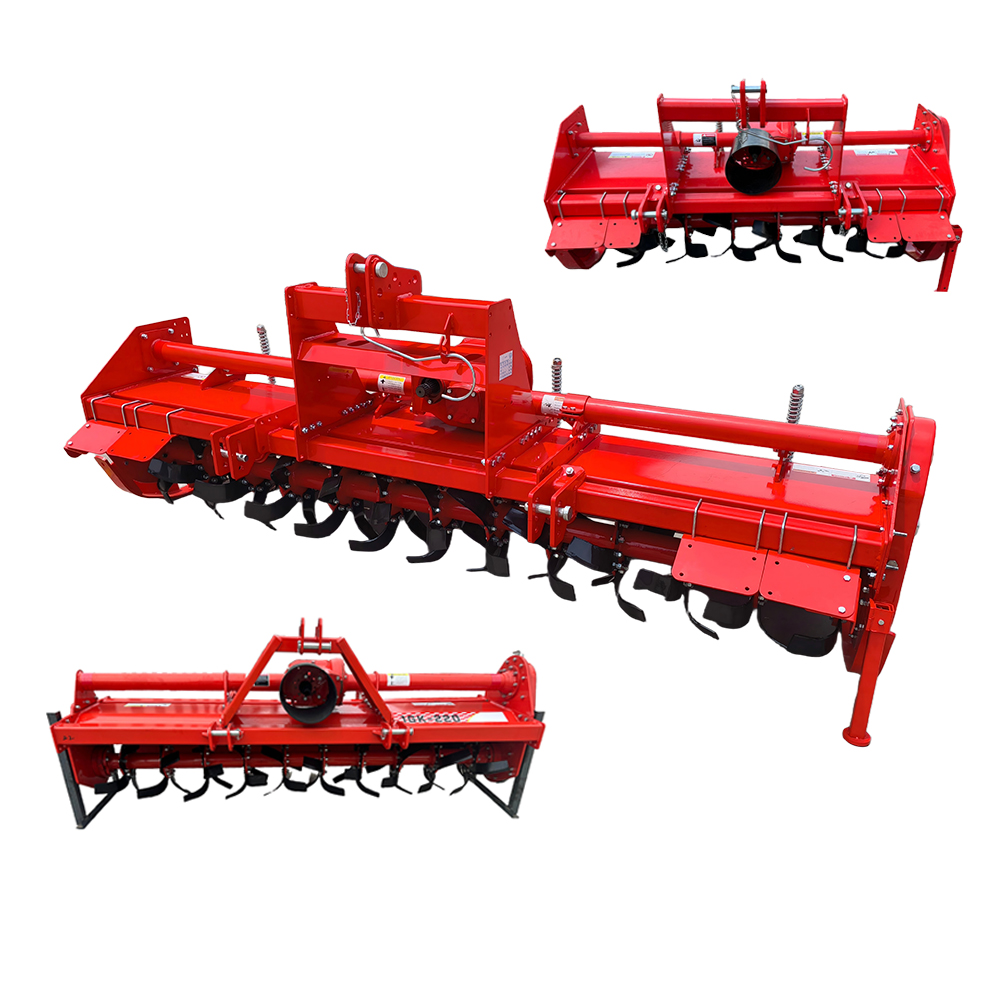
Explore MASCHIO-type rotary tillers from CXNOFIA, including 1MB, 1MC and 1GK series with 35–220 HP applications and 120–360 cm working widths.
MASCHIO-Type Rotary Tiller: 1MB, 1MC & 1GK Series Guide
Explore the complete rice transplanter spare parts list for Kubota, Yanmar and ISEKI machines. Learn which replacement parts wear out most frequently, what dealers should keep in stock, and how CXNOFIA provides one-stop agricultural machinery spare parts solutions worldwide.
Complete Rice Transplanter Spare Parts List: Top Replacement Parts for Kubota, Yanmar & ISEKI Machines