Complete Guide to Tractor Center Link
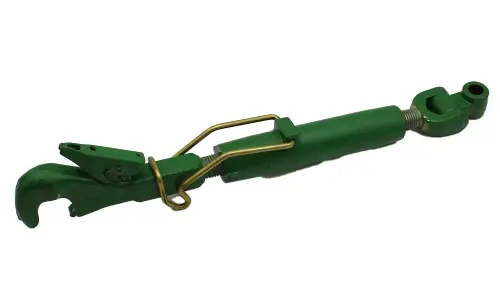
In modern agricultural operations, tractors are the backbone of efficiency. From plowing and planting to hauling and leveling, their versatility is enabled largely by the implements they carry. At the heart of connecting these implements securely and functionally to the tractor lies the tractor center link — a critical yet often overlooked part of the 3 point hitch system.
Whether you're a farm machinery manufacturer, parts supplier, or an end user looking to replace or upgrade a component, understanding the role and technical parameters of the center link for tractor is essential.
1. Understanding the Role of the Center Link in Tractor Hitch Systems
a. What Is a Center Link?
The center link, often referred to as the top link, is one of the three arms that form a tractor’s three point hitch system. While the two lower lift arms provide lifting power, the center link for tractor ensures stability, angle adjustment, and load balancing between the tractor and implement.
b. How the Tractor Center Link Functions
The center link maintains the angular position of the attached implement relative to the tractor. This positioning is vital for proper operation of:
Plows
Harrows
Seeders
Cultivators
Mowers
By adjusting the length of the center link, the operator can change the tilt or pitch of the attached implement, allowing it to work at the correct angle in varying terrain.

2. Types of Tractor Center Links: From Manual to Hydraulic
a. Manual Adjustable Center Link Tractor Parts
These traditional versions use mechanical threading, which allows the user to manually increase or decrease the length of the link by turning a center sleeve.
Pros: Simple, cost effective, widely available
Cons: Time consuming to adjust, requires operator effort
b. Hydraulic Top Link (Hydraulic Center Link)
A hydraulic center link uses a hydraulic cylinder to extend or retract the link, providing quick, remote adjustments from the tractor cabin.
Pros: Efficient, adjustable on the go, ideal for heavy or frequently adjusted implements
Cons: More expensive, requires hydraulic controls
c. Telescopic Center Link for Tractor
These types include telescopic sections and are often found in compact or small-frame tractors. They offer flexibility without full threading or hydraulics.
Use Case: Small tractors with low power requirements or simple tasks.
3. Materials and Construction Standards for Center Links
The performance and durability of a tractor center link depend on the materials used in its construction. High-quality center links are generally made from:
Forged steel or carbon steel for the main body
Hardened pins to withstand stress and shear
Zinc or powder coating for corrosion resistance
Key construction features include:
Thread integrity: Clean, deep threads for secure adjustment
Swivel or ball ends: To allow angular motion and absorb vibration
Load ratings: Specified in kN (kilonewtons) or tonnes to ensure compatibility with tractor class
4. How to Select the Right Center Link for Tractor Applications
Choosing the right center link tractor part involves multiple considerations:
a. Tractor Size and Horsepower
Each tractor model has its own hitch category (e.g., Cat 0, 1, 2, 3), which dictates the size and strength of the required center link.
Category 1: For compact tractors (20-45 HP)
Category 2: Mid size tractors (40-100 HP)
Category 3: Heavy duty tractors (80-225 HP)
b. Implement Requirements
Different implements exert different loads and angles, affecting the link’s optimal length and strength.
Plowing or tilling: Requires a durable, often adjustable or hydraulic link
Transport tasks: May require minimal angular control
c. Center Link Length and Adjustment Range
Common adjustable ranges:
Standard manual link: 450mm–600mm
Hydraulic link: 500mm–800mm stroke
Check that your link can handle the dynamic range of motion required by your implements.
5. Compatibility and Mounting: Ensuring a Proper Fit
a. Pin Diameter and End Types
Standard pin diameters vary based on category:
Cat 1: 19mm pins
Cat 2: 25mm pins
Cat 3: 32mm pins
Ball end designs can be fixed, clevis-type, or swivel-type, depending on mounting needs.
b. Thread Direction and Type
Ensure compatibility with your existing hitch setup. Some center links feature left-hand/right-hand threads for easier adjustment.
6. Maintenance Tips for Longer Life of Center Link Tractor Components
Proper care of your tractor center link is essential to maintain safe and efficient operation.
a. Routine Inspection
Check for cracks, bent rods, or worn threads
Examine locking nuts or cotter pins
b. Lubrication
Grease threaded sections and ball ends
Use waterproof lubricant for links exposed to moisture
c. Storage Practices
Store indoors or under cover
Apply rust inhibitor if stored in humid environments
7. Common Issues and Troubleshooting with Tractor Center Links
a. Stuck Threads or Seized Links
Cause: Rust or dirt accumulation
Solution: Apply penetrating oil and clean thoroughly
b. Loose Fit or Wobble in Implements
Cause: Worn ball ends or improper pin size
Solution: Replace bushings or upgrade to compatible size
c. Center Link Bending Under Load
Cause: Using a link with insufficient load rating
Solution: Upgrade to a higher-rated center link with forged steel construction
8. The Role of Center Links in Enhancing Tractor Efficiency
The center link for tractor is more than a connector — it’s a performance enhancer.
Enables precision farming with angle control
Reduces implement drag and soil disturbance
Increases overall fuel efficiency by minimizing resistance
A properly selected and maintained center link maximizes the mechanical advantage and extends the life of both the tractor and its implements.
9. Trends in Tractor Center Link Technology
a. Smart and Sensor Based Center Links
Innovative smart center links are being developed to include:
Load sensors
Position feedback
Wireless control
These features are particularly useful in precision farming applications.
b. Modular and Quick Connect Designs
To improve field efficiency, manufacturers are introducing quick-connect mechanisms and modular link kits suitable for multiple categories.
10. Sourcing Quality Center Link Tractor Parts: What to Look For
When sourcing center link tractor components for manufacturing or maintenance, consider:
ISO certified production
OEM compatibility
High load rated pins and forgings
Bulk supply with consistent specifications
Companies in the OEM tractor parts business, like those working with hydraulic cylinder factories, agricultural linkage system manufacturers, or tractor spare parts suppliers, should prioritize tested and standardized center link parts.
In the world of agricultural equipment, where productivity and reliability are everything, even the simplest components like the tractor center link play a vital role. Understanding its function, types, specifications, and maintenance ensures that both machinery and implements work in harmony.
Whether you're an individual farmer, equipment reseller, or OEM supplier, the knowledge of how to select, maintain, and troubleshoot center link tractor components is essential to efficient field operations and long-term equipment health.
Explore our extensive selection of high quality RE243206 center link tractor parts for for john deere. Manufactured by CXNOFIA, a trusted Chinese supplier of JD tractor components, this tractor center link is engineered for outstanding performance and long lasting reliability. Benefit from competitive prices, fast international delivery, hassle free returns, and exclusive limited time deals. Order now and experience the CXNOFIA advantage!
2025 Planting Season Is Coming: Small Seed Planters in High Demand Across Southeast Asia and Africa
Where Are Ring Gears Used?
Related Article