Difference Between a Compression Spring and an Extension Spring
When maintaining or repairing heavy-duty agricultural and construction equipment — like John Deere tractors — selecting the correct type of spring is not a trivial decision. It's a critical engineering choice that affects performance, safety, and longevity. Among the most commonly confused components are compression springs and extension springs. Though both are helical coil springs, their functions, load behaviors, and applications differ significantly.
What Exactly Is a Compression Spring?
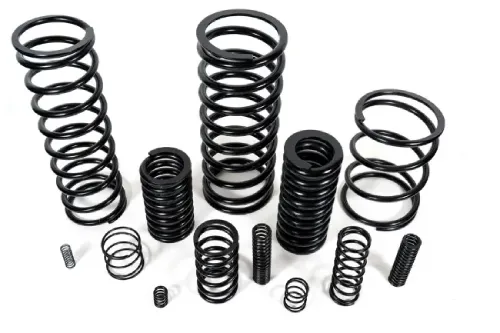
A compression spring is designed to resist compressive forces — meaning it pushes back when you press down on it. These springs are typically open-coiled, allowing space between the windings so they can be compressed without binding. The spring stores mechanical energy when compressed and releases it when the load is removed, returning to its original length. This behavior is governed by Hooke's Law, where the force exerted is proportional to the displacement.
In tractor systems — such as those compatible with John Deere models 5E-850H, 310E, or 410D — compression springs are often found in clutches, suspension systems, valve trains, and hydraulic linkages. For example, the T21816 compression spring, manufactured by CXNOFIA, is engineered for high-load resilience in demanding environments. Unlike generic hardware store springs, this is a heavy duty compression spring built to withstand repetitive stress, vibration, and extreme temperatures common in farming and construction.
When you buy compression springs for machinery, it's essential to verify material grade (often hardened steel or stainless), wire diameter, coil count, and load specifications. A mismatch can lead to premature failure — or worse, equipment damage.
How Does an Extension Spring Work?
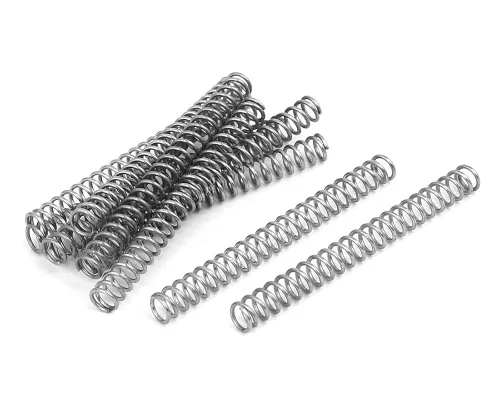
In contrast, an extension spring — sometimes called a tension spring — is designed to absorb and store energy when stretched. These springs typically have hooks or loops at each end for attachment and are wound tightly so that the coils touch when at rest. When pulled apart, they generate a restoring force that pulls the components back together.
Extension springs are commonly found in garage doors, trampolines, agricultural balers, and some throttle return mechanisms. However, they are rarely used in the high-load, high-vibration environments where compression springs excel. For instance, you wouldn't replace a clutch compression spring with an extension spring — the load direction and mechanical behavior are fundamentally incompatible.
The key technical difference lies in load application:
1. Direction of Applied Force & Spring Response
Compression Spring:
Designed to be pushed together. It resists compressive forces applied along its axis, becoming shorter under load. When the load is removed, it expands back to its original free length.
Example: In a John Deere tractor's clutch or valve assembly, the spring is compressed during operation and rebounds when pressure is released.
Extension Spring:
Designed to be pulled apart. It resists tensile forces applied along its axis, becoming longer under load. When the load is removed, it contracts back to its original length.
Example: Used in baler tensioning systems or throttle return mechanisms where pulling force is required.
2. Resting State & Coil Configuration
Compression Spring:
Coils are typically open (with space between them) at rest. This allows room for the spring to compress without coils binding together.
Critical for: High-cycle applications like hydraulic valves or suspension systems in tractors (e.g., John Deere 310E, 410D).
Extension Spring:
Coils are usually closed (touching each other) at rest. Often includes hooks, loops, or end coils for attachment points.
Critical for: Applications requiring constant tension, such as linkage return systems or safety latches.
3. Load-Deflection Behavior & Engineering Design
Compression Spring:
Follows Hooke's Law in compression: Force = Spring Rate × Distance Compressed. Must be designed with attention to ‘solid height’ (fully compressed length) to avoid over-compression and plastic deformation.
Why it matters: Heavy duty compression springs like CXNOFIA's T21816 are engineered with precise wire diameter and pitch to handle repetitive high-load cycles without sagging or failure.
Extension Spring:
Also follows Hooke's Law, but in tension: Force = Spring Rate × Distance Extended. Must be designed with initial tension and end geometry to prevent detachment or slippage.
Why it matters: If used where compression is required (e.g., replacing a clutch spring), the spring may detach, snap, or fail to provide restoring force — leading to mechanical failure.
4. Common Failure Modes & Maintenance Implications
Compression Spring:
Common failures include buckling (if too long/slender), coil binding, or loss of elasticity due to metal fatigue. In tractor parts, this can cause clutch slippage or valve timing errors.
Solution: Buy compression springs from manufacturers like CXNOFIA that specify material hardness, shot peening, and load testing — especially for models like 5E-1204 or 315SE.
Extension Spring:
Common failures include hook breakage, overstretched coils (beyond elastic limit), or corrosion at attachment points. Can cause systems to jam or lose tension.
Critical note: Never substitute an extension spring in a compression application — the load direction is fundamentally incompatible.
5. Application Suitability in Agricultural & Construction Machinery
Compression Spring:
Ideal for:
Clutch assemblies
Suspension and shock absorption
Hydraulic/pneumatic valve return systems
Seat adjustment mechanisms
CXNOFIA Relevance: Their T21816 spring is specifically compatible with John Deere models including 5E-850H, 310E, 410D — all applications requiring precise axial compression resistance.
Extension Spring:
Ideal for:
Hood or cover latches
Belt or chain tensioners
Throttle or pedal return systems
Safety interlock mechanisms
Not suitable for high-load structural roles in tractors or excavators where compression forces dominate.
Why Choosing the Right Spring Type Impacts Equipment Longevity and Safety
Using the wrong spring type — or a poorly manufactured substitute — can compromise the entire mechanical system. In a tractor's clutch assembly, for example, a weak or incorrectly rated compression spring may fail to maintain proper pressure plate tension. This leads to clutch slippage, overheating, and eventual burnout. Similarly, in hydraulic control valves, a spring that doesn't return to its precise position can cause erratic operation or fluid leaks.
This is why sourcing from reputable compression spring manufacturers matters. Companies like CXNOFIA, which specialize in custom compression springs for agricultural and construction machinery, invest in metallurgical testing, fatigue cycle validation, and dimensional precision. Their T21816 spring isn't just ‘a spring' — it's a calibrated component designed for specific John Deere models, ensuring compatibility with OEM performance standards.
When you buy compression springs for industrial use, always verify:
Load rate (pounds per inch of compression)
Solid height (fully compressed length)
Material fatigue resistance
Corrosion protection (especially for outdoor machinery)
Ignoring these specs can turn a $10 spring into a $1,000 repair.
Custom Compression Springs: When Off-the-Shelf Isn't Enough
Not every application fits a standard catalog part. That's where custom compression springs come into play. Whether you're modifying vintage equipment, upgrading performance, or replacing discontinued OEM parts, custom springs offer tailored solutions. CXNOFIA, for instance, supports customized logos, packaging, and — more importantly — custom dimensions and load profiles. This flexibility is invaluable for repair shops and fleet managers who need exact replacements for aging or specialized machinery.
Custom doesn't mean untested. Reputable manufacturers use CAD modeling, spring calculators, and prototype testing to ensure the custom spring meets the required force-deflection curve. For heavy machinery, even a 5% deviation in spring rate can cause system imbalance. That's why partnering with experienced compression spring manufacturers — not generic suppliers — is crucial.
Springs may seem like simple components, but in the world of agricultural and construction machinery, they're mission-critical. Confusing a compression spring with an extension spring isn't just a technical error — it's a risk to operational efficiency and safety. Whether you're maintaining a John Deere 5E-1204 or a 315SE backhoe, always verify spring type, specifications, and source.
Do you want to buy compression springs like the T21816? Explore high quality heavy duty compression spring from CXNOFIA, a one of the most professional compression spring manufacturers in China. Our precision engineered heavy duty compression spring are designed for durability and compatible with a wide range of leading tractor brands. Contact us now: sales@cxnofia.com
How Do I Know If My Radiator Is Bad?
Modern Peanut Harvesting Solutions: Boosting Efficiency and Productivity
Related Article