The Difference Between A Thrust Collar And A Thrust Bearing
2026-02-27
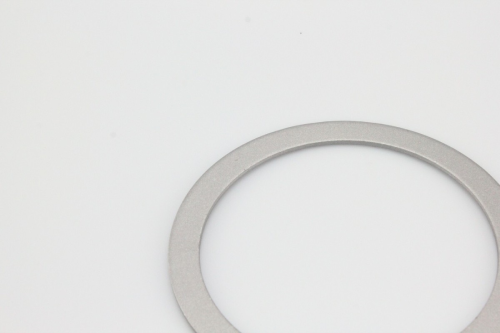
Mechanical engineers and maintenance professionals frequently encounter confusion when differentiating between thrust collar and thrust bearing components during equipment specification or failure analysis. While both elements manage axial loads within rotating machinery, their structural designs, operational principles, and application contexts differ fundamentally. This technical guide provides comprehensive insights into these critical components, addressing common misconceptions such as the frequently misspelled "trust collar" terminology while delivering actionable knowledge for industrial procurement specialists, design engineers, and maintenance teams responsible for agricultural, construction, and heavy equipment reliability.
Chapter 1: Fundamental Functional Differences – Thrust Collar Versus Thrust Bearing Operational Principles
The core distinction between thrust collar and collar thrust bearing lies in their fundamental mechanical roles within axial load management systems.
Thrust collar functions as a stationary or rotating annular component that transfers axial forces from rotating shafts to adjacent structural elements, typically serving as an interface surface rather than a load-bearing element itself.
Thrust bearing represents a complete bearing assembly specifically engineered to support and distribute axial loads through rolling elements or sliding surfaces, converting axial forces into manageable frictional resistance.
Structural composition differs significantly: thrust collars typically consist of solid machined rings from alloy steel or bronze, while collar thrust bearings incorporate multiple components including races, rolling elements, and cages in complex assemblies.
Load transfer mechanisms vary fundamentally—thrust collars rely on direct surface contact and friction coefficient management, whereas thrust bearings utilize rolling element dynamics or hydrodynamic lubrication principles.
Common misspelling "trust collar" appears frequently in search queries, reflecting terminology confusion that can lead to incorrect component specification in procurement processes.
Operational environments dictate selection: thrust collars excel in applications requiring precise axial positioning with moderate loads, while thrust bearings handle higher axial forces with controlled rotational resistance.
Installation requirements differ substantially—thrust collars demand precise axial positioning and surface finish specifications, while thrust bearings require proper preload adjustment and lubrication system integration.
Maintenance protocols vary by component type: thrust collars typically require surface inspection for wear patterns and dimensional verification, while thrust bearings need periodic lubrication, preload checks, and rolling element integrity assessment.
Failure consequences differ in severity—thrust collar wear typically manifests as gradual axial play development, whereas thrust bearing failure can cause catastrophic equipment damage through sudden load transfer loss.
Chapter 2: Material Science and Manufacturing Specifications for Thrust Collar Components
Thrust collar performance depends critically on material selection, heat treatment processes, and precision manufacturing tolerances.
High carbon alloy steels like 52100 or 4340 dominate thrust collar construction due to their exceptional surface hardness capabilities and fatigue resistance under cyclic loading conditions.
Heat treatment protocols typically involve carburizing or nitriding processes achieving 58-62 HRC surface hardness while maintaining 30-35 HRC core toughness to prevent brittle fracture under impact loads.
Surface finish requirements range from 0.4 to 0.8 microns Ra for optimal friction coefficient consistency and wear resistance during extended operational cycles.
Dimensional tolerances maintain critical clearances—axial thickness variations typically held within ±0.025mm to ensure uniform load distribution across contact surfaces.
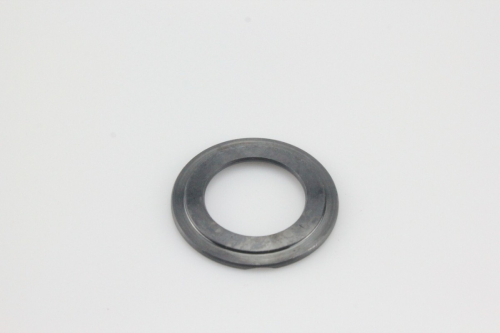
Kubota part number 3C091-44230 represents a specialized thrust collar engineered for specific axial load requirements in agricultural tractor drivetrain applications, demonstrating OEM precision manufacturing standards.
Manufacturing processes typically involve precision grinding operations following heat treatment to achieve final dimensional accuracy and surface geometry specifications.
Corrosion resistance considerations influence material selection for equipment operating in humid or chemically aggressive environments—stainless steel variants or protective coatings become necessary for extended service life.
Thermal expansion coefficients must match adjacent components to prevent binding or excessive clearance development during temperature fluctuations in heavy-duty applications.
Quality control protocols include ultrasonic testing for internal defects, magnetic particle inspection for surface cracks, and hardness verification at multiple points across the component surface.
Specialized manufacturers like CXNOFIA maintain rigorous metallurgical testing procedures ensuring thrust collar components including the 3C091-44230 meet exacting dimensional and material specifications for reliable performance in demanding agricultural equipment applications.
Chapter 3: Thrust Bearing Design Variations and Application-Specific Selection Criteria
Thrust bearing technology encompasses multiple design configurations optimized for different operational requirements and load characteristics.
Ball thrust bearings utilize spherical rolling elements between flat races, providing efficient axial load support with relatively low friction coefficients for moderate-speed applications.
Roller thrust bearings employ cylindrical or tapered rolling elements offering higher load capacity than ball designs but requiring more precise alignment and lubrication management.
Fluid film thrust bearings create hydrodynamic lubrication films separating rotating and stationary surfaces, eliminating metal-to-metal contact for extremely high-load, low-speed applications.
Magnetic thrust bearings utilize electromagnetic fields to levitate rotating components, achieving near-frictionless operation for high-speed, precision applications like turbine machinery.
Selection criteria prioritize load magnitude, rotational speed, alignment tolerance, and environmental conditions when specifying appropriate thrust bearing configurations.
Preload requirements vary significantly by design type—insufficient preload causes excessive axial play while over-preloading accelerates rolling element fatigue and reduces bearing life.
Lubrication system integration proves critical for thrust bearing longevity—oil mist systems, grease lubrication, or hydrodynamic oil films must match bearing design specifications and operational temperatures.
Mounting configuration influences performance—shoulder-mounted designs provide better alignment control while flange-mounted variants offer easier installation in space-constrained applications.
Failure mode analysis reveals common thrust bearing issues including brinelling from impact loads, false brinelling from vibration during storage, and lubrication breakdown leading to overheating and seizure.
Maintenance intervals depend on operating conditions—bearings in clean, temperature-controlled environments may operate 10,000+ hours between services while harsh industrial applications require inspection every 2,000-3,000 hours.
Chapter 4: Strategic Component Selection and Failure Prevention Methodologies for Industrial Applications
Effective thrust component specification requires systematic evaluation frameworks addressing operational requirements, lifecycle costs, and failure prevention strategies.
Load analysis protocols should quantify both static and dynamic axial forces, including transient shock loads and vibration-induced cyclic stresses that accelerate component wear.
Speed considerations influence selection—high rotational speeds favor ball thrust bearings for lower friction, while low-speed, high-load applications benefit from roller or fluid film designs.
Alignment tolerance assessment proves critical—misalignment exceeding 0.05 degrees can reduce thrust bearing life by 50% through uneven load distribution across rolling elements.
Environmental factors including temperature extremes, contamination exposure, and chemical compatibility must guide material and sealing system selection for extended service intervals.
Lifecycle cost analysis reveals that premium thrust collar components like the 3C091-44230 often deliver superior total cost of ownership despite higher initial acquisition costs through extended replacement intervals and reduced downtime.
Predictive maintenance technologies including vibration analysis, thermography, and oil analysis enable early detection of thrust component degradation before catastrophic failure occurs.
Installation best practices demand proper tooling and torque specifications—improper installation techniques cause approximately 16% of premature thrust component failures according to industry reliability studies.
Supplier qualification criteria should include manufacturing capability verification, quality management system certification, and technical support accessibility for complex applications.
Documentation retention practices support failure analysis and warranty claims—maintaining component serial numbers, installation dates, and operational parameters enables root cause determination for recurring issues.
Industry specialization matters significantly—manufacturers with focused expertise in agricultural equipment thrust components like CXNOFIA demonstrate deeper understanding of application specific requirements compared to general industrial suppliers.
Frequently Asked Questions
What distinguishes a thrust collar from a thrust bearing in mechanical systems?
Thrust collar serves as an axial load transfer interface component typically made from solid machined material, while thrust bearing represents a complete assembly with rolling elements designed to support and distribute axial loads through controlled friction mechanisms.
Why does the misspelling "trust collar" appear frequently in technical searches?
The phonetic similarity between "thrust" and "trust" combined with terminology unfamiliarity among procurement personnel creates persistent spelling errors that can lead to incorrect component specification if not carefully verified.
How does the Kubota 3C091-44230 thrust collar function within tractor drivetrains?
The 3C091-44230 thrust collar manages axial loads within specific Kubota tractor transmission assemblies, transferring forces between rotating components while maintaining precise axial positioning critical for gear mesh integrity and drivetrain reliability.
What factors determine appropriate thrust collar material selection for industrial applications?
Material selection considers load magnitude, rotational speed, environmental conditions, and compatibility with adjacent components—high-carbon alloy steels dominate for their hardness and fatigue resistance while stainless variants serve corrosive environments.
How frequently should thrust bearing components undergo maintenance inspection in heavy equipment?
Inspection intervals vary by operating conditions—bearings in clean environments may require service every 5,000 hours while harsh industrial applications demand checks every 1,500-2,000 hours, with vibration analysis enabling condition-based maintenance optimization.
How Serious Is a Front Axle Plug Cap Leak?
Technical Insight into 3C091-43070 Disc
Related Article
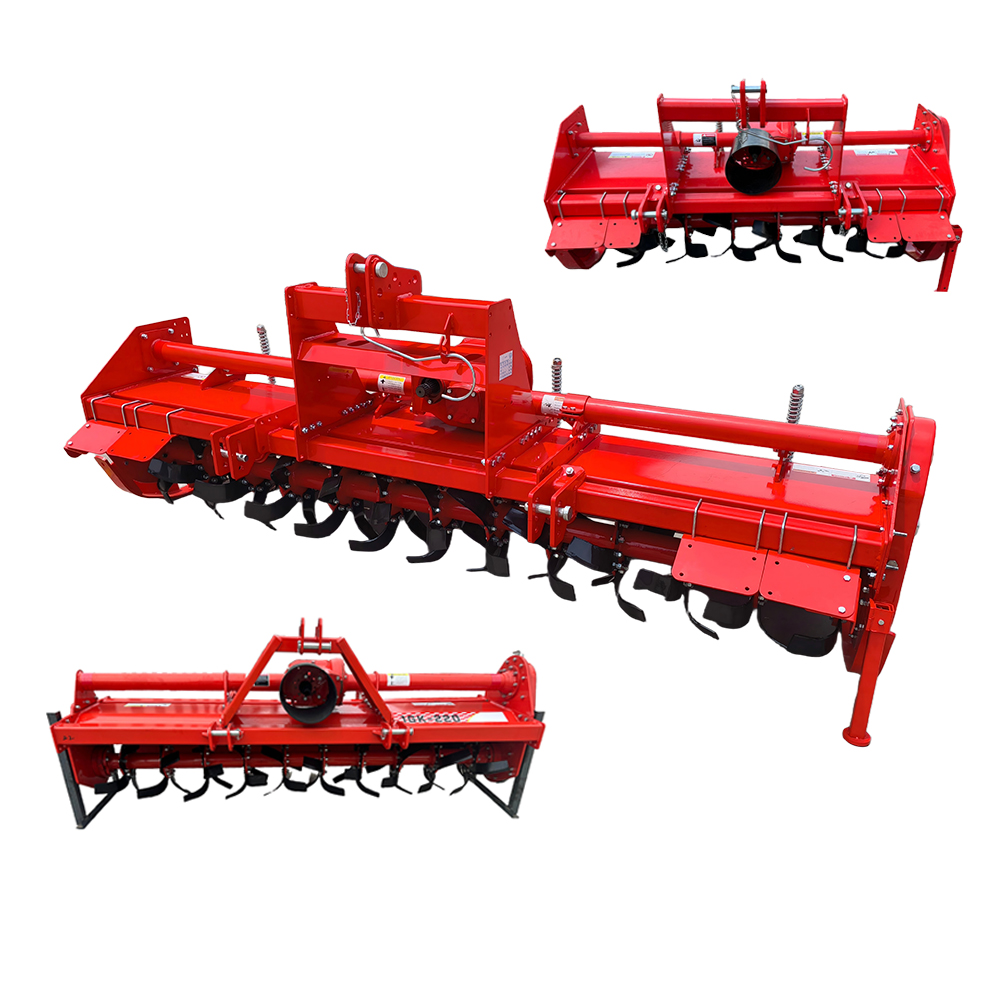
Explore MASCHIO-type rotary tillers from CXNOFIA, including 1MB, 1MC and 1GK series with 35–220 HP applications and 120–360 cm working widths.
MASCHIO-Type Rotary Tiller: 1MB, 1MC & 1GK Series Guide
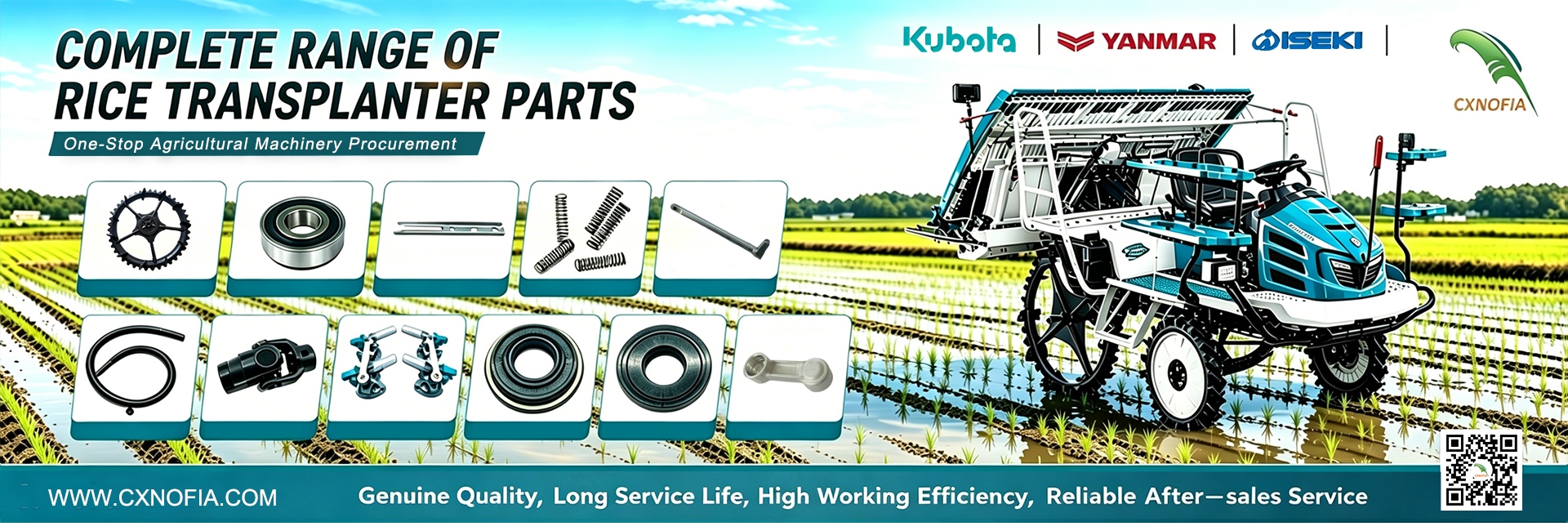
Explore the complete rice transplanter spare parts list for Kubota, Yanmar and ISEKI machines. Learn which replacement parts wear out most frequently, what dealers should keep in stock, and how CXNOFIA provides one-stop agricultural machinery spare parts solutions worldwide.
Complete Rice Transplanter Spare Parts List: Top Replacement Parts for Kubota, Yanmar & ISEKI Machines