Do PTO Shafts Have To Be Guarded?
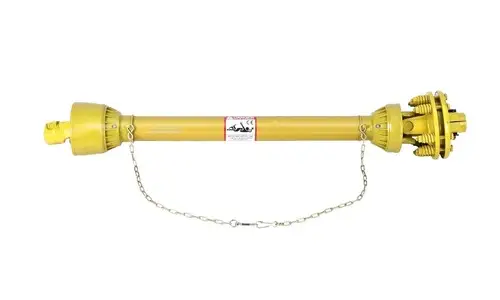
In modern agriculture, the PTO shaft (Power Take-Off shaft) is an essential piece of mechanical linkage that enables tractors to transfer engine power to various attachments like rotary tillers, balers, sprayers, and rotavators. However, with this power comes significant risk—especially if the shaft is left unguarded. So, do PTO shafts have to be guarded? The answer, both from a safety and legal standpoint, is a definitive yes.
What Is a PTO Shaft and Why Is Guarding Essential?
A PTO shaft is a rotating mechanical shaft that connects a tractor's PTO stub to an implement. It transfers torque and speed to operate machines like:
Rotary tillers
Mowers
Spreaders
Rotavators
Because PTO shafts operate at high speeds—often 540 or 1000 RPM—any exposed rotation creates a severe entanglement hazard. Loose clothing, shoelaces, or even limbs can get caught, leading to serious injuries or fatalities.
That's why PTO shaft guarding is not just a recommendation—it is a mandatory safety requirement across most agricultural safety standards worldwide.
What Are PTO Shaft Guards?
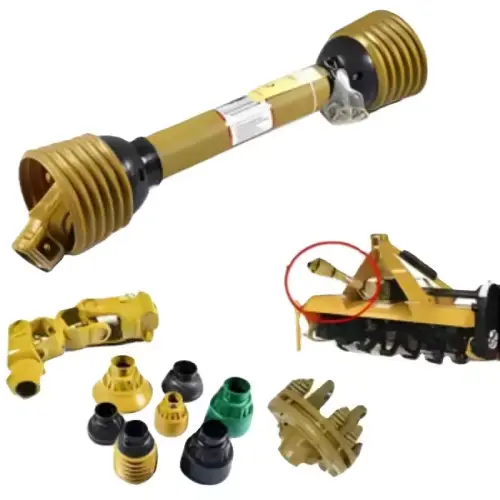
PTO shaft guards are protective covers or shields installed over rotating components to prevent direct contact during operation. These include:
Main plastic tube shields that rotate independently around the shaft
End guards or cones that cover the universal joints (U-joints)
Bearing rings that allow the guard to stay stationary while the shaft rotates inside
High quality PTO shafts, such as those used in rotary tillers or rotavators, are fitted with CE-compliant or ISO-standard guards that protect the operator while allowing lubrication and maintenance access.
Why PTO Shaft Guarding Is Mandatory: Legal and Safety Compliance
1. OSHA and ANSI Standards
In the U.S., OSHA (Occupational Safety and Health Administration) mandates that all PTO-driven equipment be guarded to prevent injury. ANSI (American National Standards Institute) also has detailed design and performance standards for agricultural machinery guarding.
2. EU Machinery Directive
In Europe, the 2006/42/EC Machinery Directive explicitly requires guards on all rotating power transmission components. Non-compliance can lead to fines, recalls, or legal liabilities.
3. China GB Standards and Global Adoption
Manufacturers like CXNOFIA, based in China, align their aftermarket PTO shafts and agricultural drive shaft systems with both domestic GB/T standards and international ISO requirements, ensuring wide-ranging market compatibility and safety compliance.
The Real Risks of Unguarded PTO Shafts
Some farmers may still operate older equipment or assume short-term use justifies skipping guards. This is a dangerous misconception. Here's why:
1. High Speed Rotation
At 540 RPM, a PTO shaft rotavator makes 9 full rotations per second. A simple misstep can result in catastrophic injury before the operator even registers danger.
2. Entanglement and Crushing
Loose clothing, long hair, and even tools can get pulled into the spinning shaft, resulting in crushed limbs or death.
3. Shear Force Transmission
Without a guard, contact with the universal joint at high torque can shatter bones or sever extremities in seconds.
Every year, hundreds of accidents involving unguarded rotary tiller PTO shafts are reported globally—most of them preventable with proper shielding.
Components of a Complete PTO Guarding System
When purchasing or maintaining agricultural drive shafts, it's essential to understand which parts contribute to a properly guarded system:
Outer Protective Tube: A rotating or stationary plastic sleeve that covers the shaft.
End Guards or Cone Guards: Cover the universal joints at both ends.
Bearing Retainers: Keep the guards in place while allowing rotation.
Locking Rings or Chains: Prevent the guard from rotating with the shaft.
CXNOFIA's aftermarket PTO shafts are designed with all these components integrated, offering both protection and durability in rough agricultural environments.
Guarded PTO Shafts for Specific Applications: Rotary Tillers and Rotavators
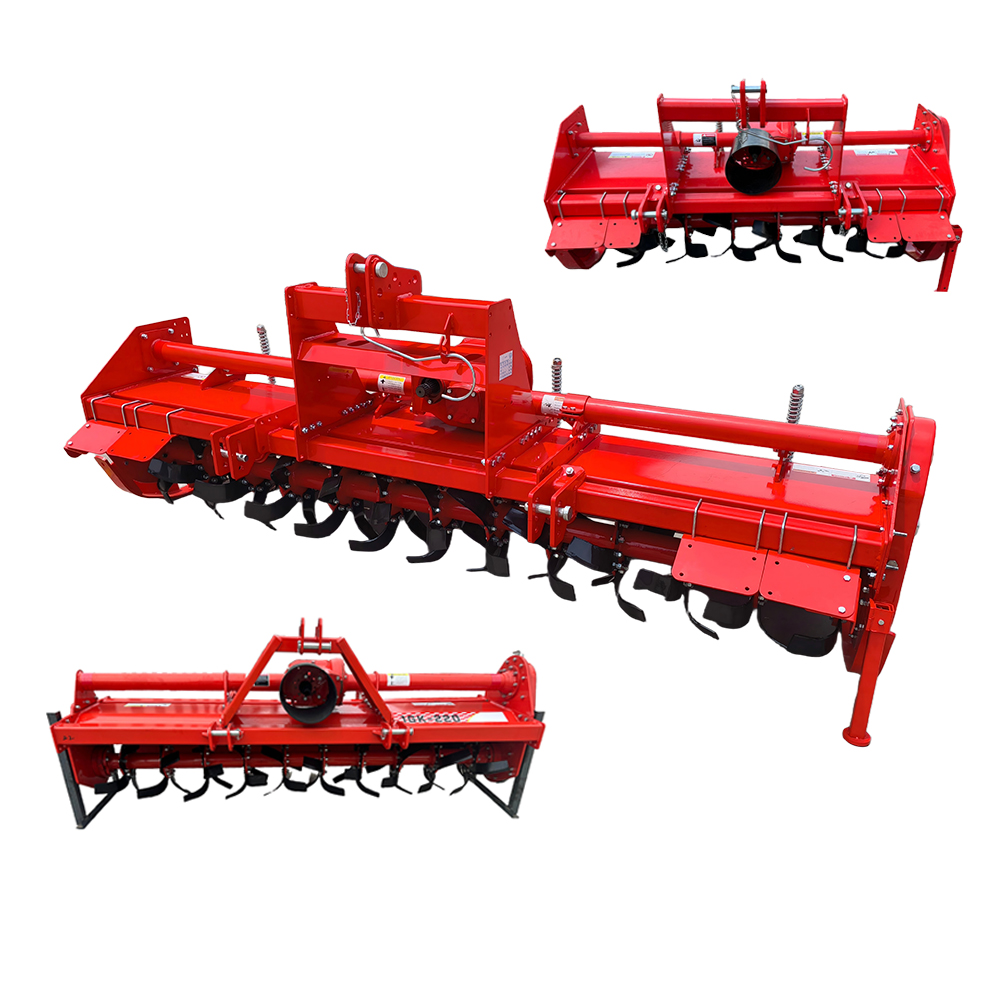
Rotary Tiller PTO Shaft
Often works close to the ground in tilled soil.
Exposed to high dust and debris levels, which can erode unguarded metal quickly.
Requires fully enclosed shaft guards to protect both operator and machine from impact and ingestion.
PTO Shaft Rotavator
Heavy duty and torque-intensive application.
High likelihood of sudden implement movement or bouncing.
CXNOFIA designs rotavator PTO shafts with reinforced plastic shielding and safety-compliant profiles to handle angular stress while maintaining operator protection.
In both cases, guarding isn't just about compliance—it significantly extends the operational life of the shaft and connected components by preventing debris impact and mechanical wear.
Best Practices for PTO Shaft Guard Inspection and Maintenance
Even if your PTO shaft rotavator is equipped with guards, maintenance is key:
Inspect guards before each use for cracks, warping, or looseness.
Ensure cone guards are securely mounted and spin freely.
Replace damaged or missing guards immediately—never operate "just for a minute" without them.
Lubricate through access points to avoid dismantling the safety shield.
CXNOFIA's agricultural drive shaft systems come with accessible grease fittings and shielded access points, making routine maintenance fast and safe.
Sourcing Safe Aftermarket PTO Shafts with Integrated Guards
When browsing for aftermarket PTO shafts, ensure your chosen supplier provides:
CE or ISO-compliant guards made of UV-resistant plastic
Full shielding from yoke to yoke, not just the shaft tube
Replacement parts availability, including cones, tubes, and retaining rings
Custom length options for rotary tiller and rotavator applications
CXNOFIA offers all of the above, manufacturing safety-engineered PTO shafts for OEMs, dealers, and farm owners worldwide. They rigorously test each unit for structural integrity and shielding effectiveness, without overpricing or overselling unnecessary add-ons.
PTO Shaft Guards Are Not Optional—They Are Essential
To conclude, yes—PTO shafts have to be guarded. Whether you're running a compact rotary tiller, a large rotavator, or any other PTO-powered attachment, guarding is a legal, ethical, and practical requirement.
The cost of skipping this simple component can be a life-altering injury or a destroyed machine. Instead, invest in quality, safety certified agricultural drive shafts with full guarding—especially when sourcing aftermarket PTO shafts for replacement or upgrade.
Manufacturers like CXNOFIA lead the way by providing rotary tiller PTO shafts and rotavator PTO shaft assemblies that combine durability, performance, and built-in operator protection—making modern farming not just productive, but safer too.
Explore our aftermarket pto shafts, widely used to power various pieces of agricultural machinery, including balers, chippers, forest machinery, forestry flail mowers, power harrows, rotary tillers, round balers, snow blowers, spading machines and more, precisely engineered for john deere or kubota. Manufactured by CXNOFIA—an experienced and trusted supplier of rotary tiller pto shaft in China—the durable agricultural drive shaft delivers outstanding performance and long lasting reliability. Benefit from competitive pricing, fast worldwide shipping, hassle free returns, and exclusive limited time offers. Discover the proven quality and dependability of CXNOFIA today.
Are PTO Shafts Adjustable?
Can A PTO Shaft Be Too Long?
Related Article