How To Install A Tapered Bearing?
2026-01-19
What Is a Tapered Bearing and Why Installation Matters?
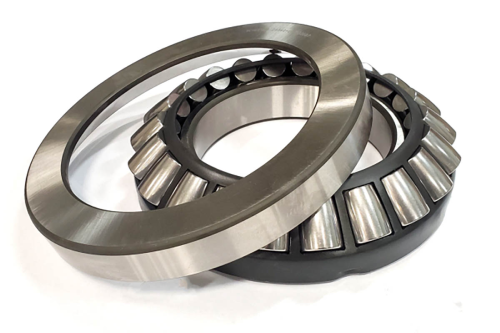
A tapered bearing is a type of rolling element bearing with inner and outer raceways shaped as segments of a cone. Because the axes of the cones converge to a common point, tapered bearings are uniquely capable of handling both radial and axial loads. This design makes them widely used across automotive axles, industrial gearboxes, agricultural machinery, and heavy load applications where shaft alignment and load capacity are critical.
Unlike deep groove ball bearings or cylindrical roller bearings, tapered bearings must be installed with precision to realize their performance potential. Improper installation can result in uneven load distribution, premature wear, or catastrophic failure. The taper roller bearing design features separable cone and cup components that allow careful control of fit and preload during assembly.
Key Use Cases: Taper Bearing Uses Across Industries
Common taper bearing uses:
Automotive wheel hubs handling combined radial and axial forces
Agricultural equipment spindles and PTO assemblies
Heavy machinery gearboxes and transmission shafts
Differential carriers and axle assemblies
Their ability to sustain thrust loads, accommodate misalignment, and operate reliably under harsh conditions makes them indispensable for many mechanical systems. A model such as the 34070-12200 tapered roller bearing used in tractor parts reflects these uses, where load cycles and environmental exposure are significant.
Separable vs Non Separable Tapered Bearings
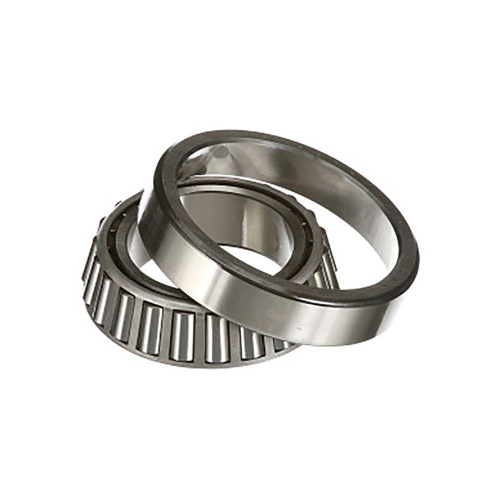
Most single row tapered roller bearings are separable, meaning the cone (inner ring with rollers and cage) can be installed independently from the cup (outer ring). This feature simplifies mounting and preload adjustment. Multi-row designs (double-row or four-row) may not be separable and often come pre-adjusted at the factory, requiring careful handling during installation of the integrated unit.
While the separable design allows flexibility, it also places greater responsibility on the technician to ensure that components are correctly aligned and seated during installation. This contrasts with a taper roller ball bearing, which combines different rolling elements but shares the same need for precision mounting.
Pre-Installation Preparation and Safety Checklist
Clean, Inspect, and Prepare Mating Surfaces
A successful tapered bearing installation always begins with meticulous preparation. Both the shaft and housing must be:
Clean and free of contamination such as dirt, machining debris, or surface oxidation
Inspected for burrs, scratches, wear, or dimensional deviation
Deburred and polished if necessary to ensure smooth surfaces
Any imperfection on mating surfaces can prevent uniform seating of the tapered surfaces and lead to premature stress concentration under load. Prior to handling, remove all packaging only when ready to install and keep bearings covered until immediately before use to minimize contamination risk.
Environmental and Tool Requirements
Installations should occur in a dry, clean environment to reduce the opportunity for foreign particles to enter during assembly. Use clean lint-free cloths, solvent wipes, and proper gloves. Avoid placing bearings on dirty or absorbent surfaces during the process.
Proper tools are essential. Recommended tools include:
Hydraulic or mechanical press with tailored adapters
Installation sleeves or tubular drifts
Heating equipment (induction heater or oil bath) for interference fits
Torque wrenches for final adjustment
These tools help apply force evenly to the designated raceway faces. Never hammer directly on the bearing end face, as uneven force can damage raceways or cage assemblies.
Verify Specifications and Interference Fits
Before attempting installation, confirm:
Shaft diameter and housing bore tolerances
Bearing internal clearance and required preload
Component fit type (interference, transition, or clearance fit)
For press-fit applications, precise interference conditions must be known to ensure correct seating without inducing excessive stress in the bearing rings. Bearings with significant interference may require thermal methods to aid installation.
Step-by-Step Installation of a Tapered Bearing
Step 1: Clean and Lubricate All Components
Even if a bearing arrives pre-lubricated, confirm compatibility with intended service lubricant. For applications requiring regreasing, apply an appropriate lubricant to rollers, raceways, and cages to facilitate assembly and provide protection during initial operation.
Ensure all components are completely dry after cleaning and before lubrication. Lubrication at this stage reduces friction during installation and helps protect precision surfaces.
Step 2: Press the Outer Ring (Cup) Into the Housing
Position the outer ring (cup) into the housing bore so that its large end corresponds with the shoulder that will carry axial loads. Apply even pressure using a press or installation sleeve adapted to the outer ring's face. Ensure the ring seats fully without tilting. For interference fits that are too tight at room temperature, controlled heating of the bearing outer ring (up to appropriate manufacturer temperature limits) can expand the metal and smooth the fit. Practitioners aim for consistent expansion without exceeding safe thermal limits.
Step 3: Position the Inner Ring (Cone) on the Shaft
After the outer ring is seated, place the inner ring (cone) assembly onto the shaft. This is typically a press fit against the shoulder of the shaft or a light interference with the journal diameter. Use consistent, even force applied through the correct face of the bearing — never through rollers or cage — to prevent damage.
Step 4: Adjust Preload and Axial Clearance
A defining characteristic of tapered bearings is an adjustable axial clearance or preload. Proper preload is essential:
Too much preload increases friction, heat, and wear
Too little preload allows axial movement and reduces rigidity
In paired bearing configurations (common in automotive wheel ends), preload is set by tightening an adjustment nut while rotating the shaft to seat the components. Once the desired end play or preload is achieved, back off slightly (if specified) to reach the correct operating clearance.
Advanced methods — such as shim adjustments or measurement tools like dial indicators — may be used in precision machinery to fine-tune the position. Proper preload ensures that the bearings share load evenly and maintain optimal contact geometry under dynamic conditions.
Step 5: Final Tests and Operational Checks
Once installed:
Rotate the shaft by hand to confirm smooth operation without binding
Perform a low speed run-in under no-load conditions
Progressively increase speed and load while monitoring noise, vibration, and temperature
Any anomalies should prompt immediate inspection. Comprehensive testing identifies installation issues before the system enters full operational duty.
Advanced Issues, Taper Roller Bearing Price, and Common Pitfalls
Tapered Bearing Price and Selection Considerations
Bearing cost varies based on size, contact angle, precision class, materials, and manufacturer. Factors such as load capacity, rotational speed (limiting speed), and environmental demands influence price. Higher-precision bearings or those designed for extended life under heavy load typically command higher taper roller bearing price points.
When selecting bearings, match specifications to application demands rather than cost alone. Components like the 34070-12200 tapered roller bearing used in tractors exemplify bearings chosen for load profiles and operating environments rather than simple price metrics.
Common Installation Challenges and How to Avoid Them
Installation pitfalls include:
Improper cleaning, leading to premature wear or particle inclusion
Uneven pressure application, causing misalignment or rolling surface damage
Incorrect preload, resulting in either excessive thermal buildup or axial play
Missing spacers or seals, undermining bearing life
Successful installation ensures that the bearing's conical surfaces engage properly and that clearances are within design specifications.
Frequently Asked Questions (FAQ)
What is the difference between a taper roller bearing and a taper roller ball bearing?
A taper roller bearing uses conical rollers to handle combined loads, whereas a taper roller ball bearing uses balls. The former provides higher axial load capacity and stiffness for heavy loads.
Do tapered bearings always need preload?
Not always. Some applications require minimal preload to achieve balance between rigidity and heat generation. Preload requirements depend on design and operating conditions.
Can tapered bearings be installed without heating?
Smaller bearings often can be pressed in at room temperature. Larger bearings with tight interference fits benefit from controlled heating to expand the bore for easier installation.
Is it acceptable to install bearings by hand?
Final seating and preload adjustment should be done with proper tools to ensure even force and correct positioning. Hand assembly without proper tools risks misalignment.
How does bearing installation affect service life?
Proper installation directly affects service life. Bearings installed with correct alignment, lubrication, preload, and cleanliness perform significantly longer than improperly mounted counterparts.
Purpose of A Tractor Shim
Why Use Tapered Roller Bearings?
Related Article
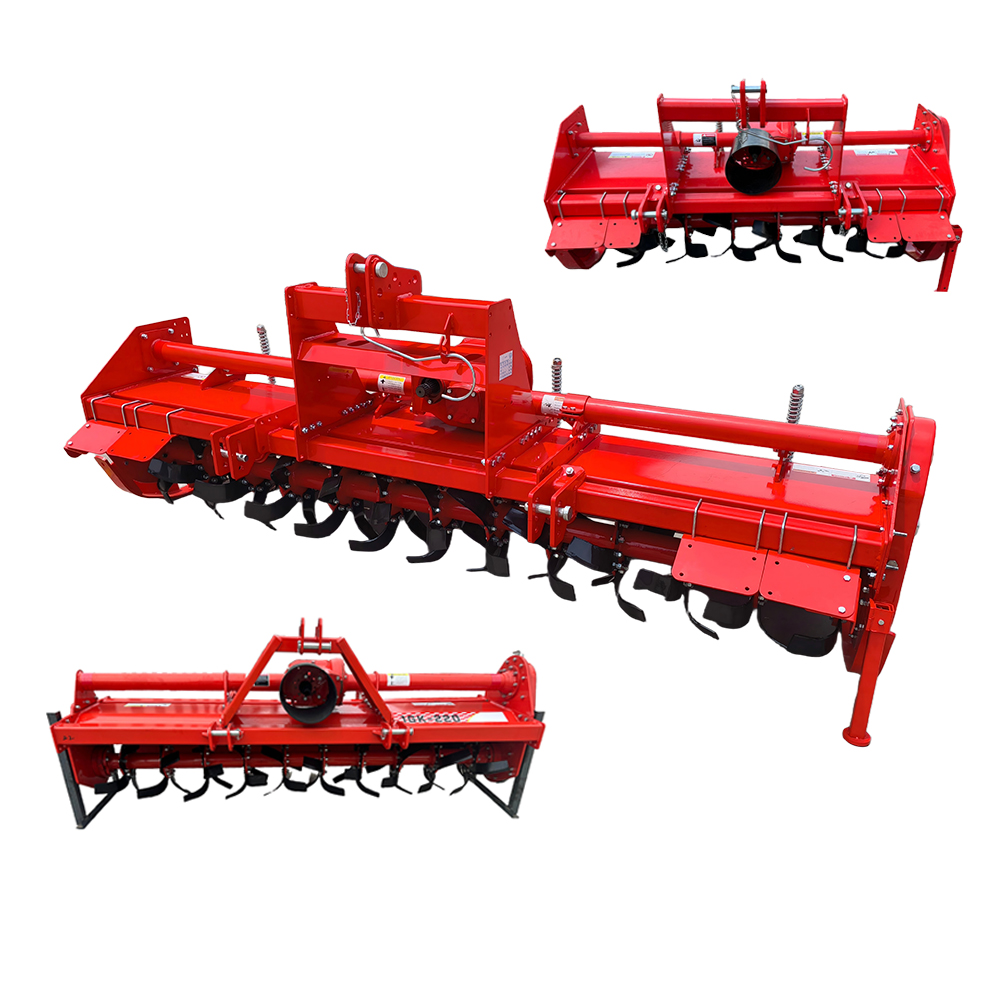
Explore MASCHIO-type rotary tillers from CXNOFIA, including 1MB, 1MC and 1GK series with 35–220 HP applications and 120–360 cm working widths.
MASCHIO-Type Rotary Tiller: 1MB, 1MC & 1GK Series Guide
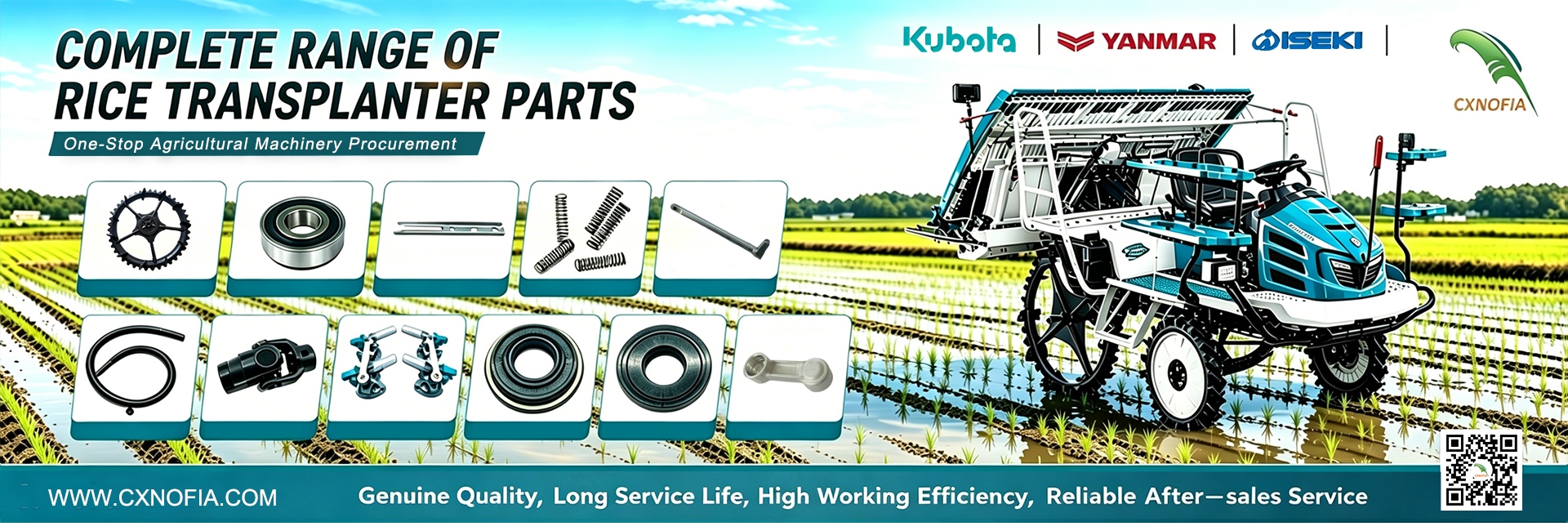
Explore the complete rice transplanter spare parts list for Kubota, Yanmar and ISEKI machines. Learn which replacement parts wear out most frequently, what dealers should keep in stock, and how CXNOFIA provides one-stop agricultural machinery spare parts solutions worldwide.
Complete Rice Transplanter Spare Parts List: Top Replacement Parts for Kubota, Yanmar & ISEKI Machines