Difference Between Tapered Roller Bearings And Roller Bearings
2025-12-30
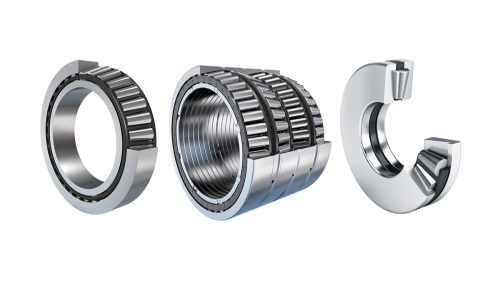
In the world of mechanical engineering and industrial machinery, bearings are silent workhorses—critical yet often overlooked until failure occurs. Among the most frequently confused categories are roller bearings and tapered roller bearings. While both fall under the rolling-element bearing family, their designs, load-handling capabilities, and applications differ significantly. This distinction is not merely academic; misselecting a bearing type can lead to premature wear, system inefficiency, or even catastrophic mechanical failure. Drawing on technical insights from industry practices—and referencing real-world components like the 34070-12200 taper roller bearing used in agricultural machinery.
Fundamental Design Differences: How Geometry Dictates Function in Roller vs. Tapered Roller Bearings
At their core, both standard roller bearings (typically cylindrical roller bearings) and taper roller bearings use rolling elements to reduce friction between rotating parts. However, their geometries create divergent performance profiles.
Cylindrical roller bearings feature rollers that are straight and parallel to the shaft axis. This design excels at handling high radial loads—forces perpendicular to the shaft—making them ideal for applications like electric motors, gearboxes, and conveyor systems where axial (thrust) loads are minimal or managed separately. Their simplicity allows for high-speed operation and easy maintenance.
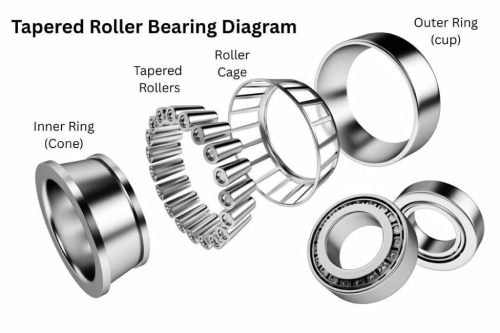
In contrast, taper roller bearings (often misspelled as “tape roller bearing” in search queries) consist of conical rollers and raceways that converge at a common apex. This angled geometry enables them to simultaneously support combined radial and axial loads in a single direction. The greater the contact angle, the higher the thrust load capacity. This makes tapered bearings indispensable in applications where forces act at an angle—such as vehicle wheel hubs, tractor differentials, and industrial gear drives.
A critical nuance: tapered roller bearings are almost always used in pairs or sets (e.g., face-to-face or back-to-back configurations) to handle bidirectional axial loads or provide enhanced rigidity. This leads directly into the importance of precise taper bearing assembly, a process requiring controlled preload and alignment to avoid uneven stress distribution.
Load Capacity, Speed Limitations, and Real-World Performance Trade-Offs
When selecting between bearing types, engineers must weigh not just load magnitude but also direction, speed, and operating environment.
Standard cylindrical roller bearings offer superior radial load capacity per unit size and can operate at higher speeds due to lower centrifugal forces on the straight rollers. However, they cannot effectively manage significant axial forces. If axial loads are present—however slight—they can cause roller skewing, edge loading, and rapid failure.
Tapered roller bearings, by design, convert axial loads into radial components through their conical geometry, distributing stress more evenly across the contact surfaces. This makes them exceptionally robust in high-load, low-to-moderate speed scenarios. For instance, in agricultural machinery like Kubota tractors, components such as the 34070-12200 taper roller bearing are engineered to endure constant shock loads, dirt exposure, and combined stresses from torque, weight, and terrain-induced forces.
However, this strength comes with trade-offs. The sliding action at the roller large-end rib increases friction, limiting maximum rotational speeds compared to cylindrical types. Additionally, improper taper bearing assembly—such as incorrect preload—can lead to overheating or brinelling. This is why maintenance manuals for heavy equipment often include detailed torque specifications and alignment procedures.
For applications requiring extreme rigidity under combined loads, engineers may opt for a double row tapered roller bearing, which integrates two rows of rollers in a single housing. These offer even greater load capacity and resistance to moment loads but demand even more precision during installation.
Interchangeability, Sizing Standards, and the Role of Part Numbers Like 34070-12200
One of the most common sources of confusion lies in bearing identification and replacement. Unlike generic fasteners, bearings are highly engineered components with tight tolerances. The part number 34070-12200, for example, isn’t arbitrary—it encodes critical dimensional and performance data specific to Kubota tractor drivetrain systems.
Many users mistakenly assume that any “taper roller bearing” of similar outer diameter can substitute a worn unit. In reality, tapered bearings must match not only the bore, outer diameter, and width but also the contact angle, roller count, and internal clearance. This is where a taper bearing size chart becomes essential—but caution is warranted: size charts alone are insufficient without verifying dynamic load ratings and application context.
Moreover, tapered roller bearings are often sold as matched sets (cone and cup), and mixing components from different manufacturers—even if dimensions appear identical—can compromise performance due to variations in material hardness, surface finish, or heat treatment.
Suppliers like CXNOFIA, which catalog specialized parts such as the 34070-12200 taper roller bearing, play a role in the aftermarket ecosystem by providing direct replacements that adhere to OEM specifications. However, the emphasis for end-users should always be on technical compatibility, not brand alone. Verifying dimensional drawings, load ratings, and application notes remains the engineer’s responsibility.
Frequently Asked Questions About Tapered and Cylindrical Roller Bearings
Q: What’s the difference between a “tape roller bearing” and a taper roller bearing?
A: “Tape roller bearing” is a common misspelling. The correct term is taper roller bearing, referring to its conical (tapered) geometry.
Q: Can I replace a cylindrical roller bearing with a tapered one in my gearbox?
A: Only if the housing, shaft, and load profile are redesigned to accommodate the tapered bearing’s axial reaction forces and assembly requirements. Direct substitution is not advisable.
Q: Where can I find a reliable taper bearing size chart?
A: Reputatable bearing manufacturers (e.g., SKF, Timken, NSK) publish detailed catalogs with dimension tables. Always cross-reference with your equipment’s service manual.
Q: Why do agricultural machines like tractors use the 34070-12200 taper roller bearing specifically?
A: This bearing is engineered for high combined loads, contamination resistance, and durability under shock—critical in off-road, high-torque environments.
Q: What are the signs of improper taper bearing assembly?
A: Excessive heat, abnormal noise, premature wear on one side of the rollers, or play in the shaft. Proper preload and alignment are essential.
Q: Are double row tapered roller bearings always better than single row?
A: Not necessarily. They offer higher rigidity and load capacity but are bulkier, more expensive, and harder to install. Use them only when moment loads or space constraints justify the complexity.
The choice between roller bearings and taper roller bearings hinges on a deep understanding of load vectors, speed requirements, and system constraints. While cylindrical rollers dominate in pure radial applications, tapered designs are unmatched where combined loading is present. By prioritizing technical specifications over assumptions—and leveraging precise part identification like the 34070-12200—professionals can ensure mechanical reliability, safety, and longevity across industries from automotive to agriculture.
Do Tapered Roller Bearings Need Grease?
Top 10 Tractor Assy Bracket Suppliers
Related Article
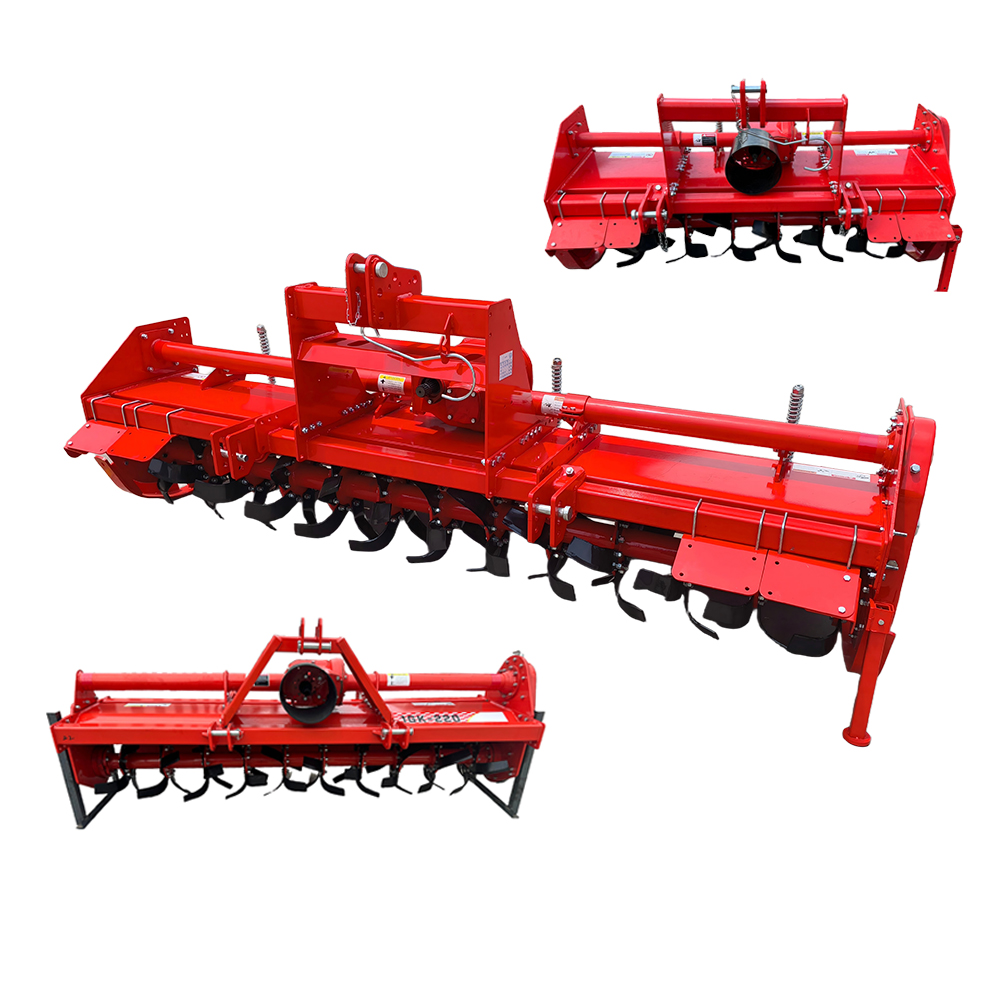
Explore MASCHIO-type rotary tillers from CXNOFIA, including 1MB, 1MC and 1GK series with 35–220 HP applications and 120–360 cm working widths.
MASCHIO-Type Rotary Tiller: 1MB, 1MC & 1GK Series Guide
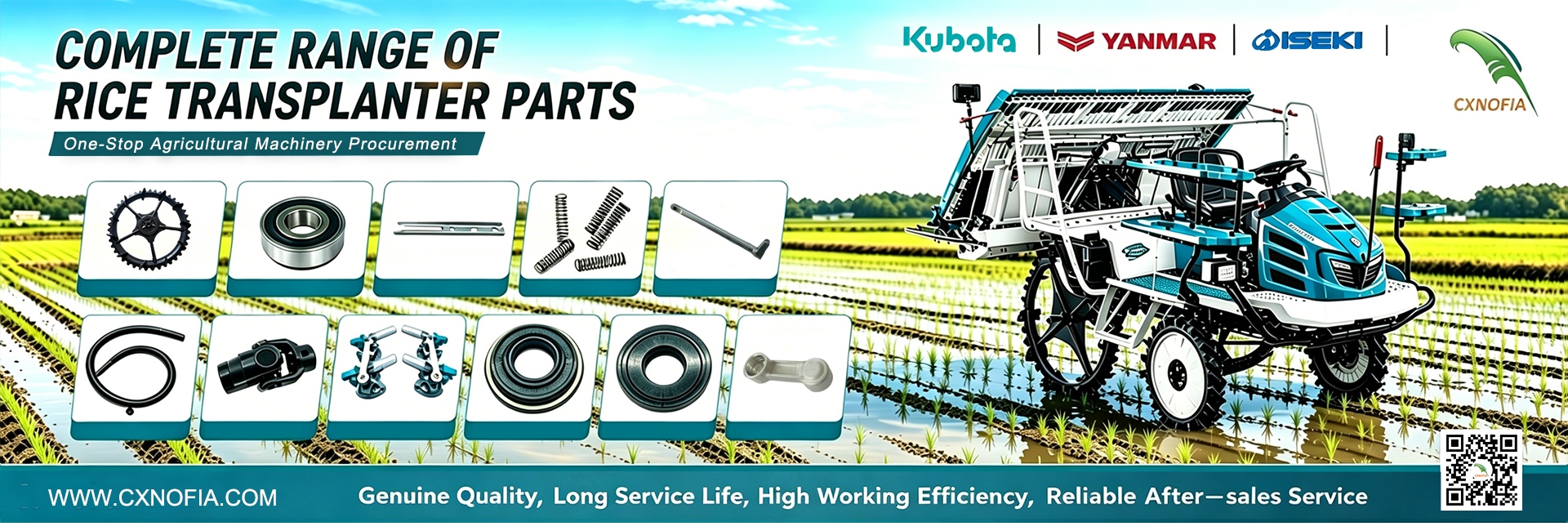
Explore the complete rice transplanter spare parts list for Kubota, Yanmar and ISEKI machines. Learn which replacement parts wear out most frequently, what dealers should keep in stock, and how CXNOFIA provides one-stop agricultural machinery spare parts solutions worldwide.
Complete Rice Transplanter Spare Parts List: Top Replacement Parts for Kubota, Yanmar & ISEKI Machines