The Growing Use of Hand-Pushed and Tractor-Mounted Corn Planters
The Growing Use of Hand-Pushed and Tractor-Mounted Corn Planters: A Global Perspective
Corn, a vital staple crop for food, feed, and biofuel production, remains one of the most essential crops grown worldwide. As farming continues to evolve, so does the technology behind planting methods. Among the various innovations in agricultural equipment, corn planters play a pivotal role in shaping farming practices. Depending on the scale of the operation, farmers around the world rely on two primary types of corn planters: hand-pushed planters and tractor-mounted planters. Each of these machines has its advantages and is suited for different farming needs, environments, and economic conditions. In this article, we will explore the differences, advantages, and the global adoption of these two types of planters.
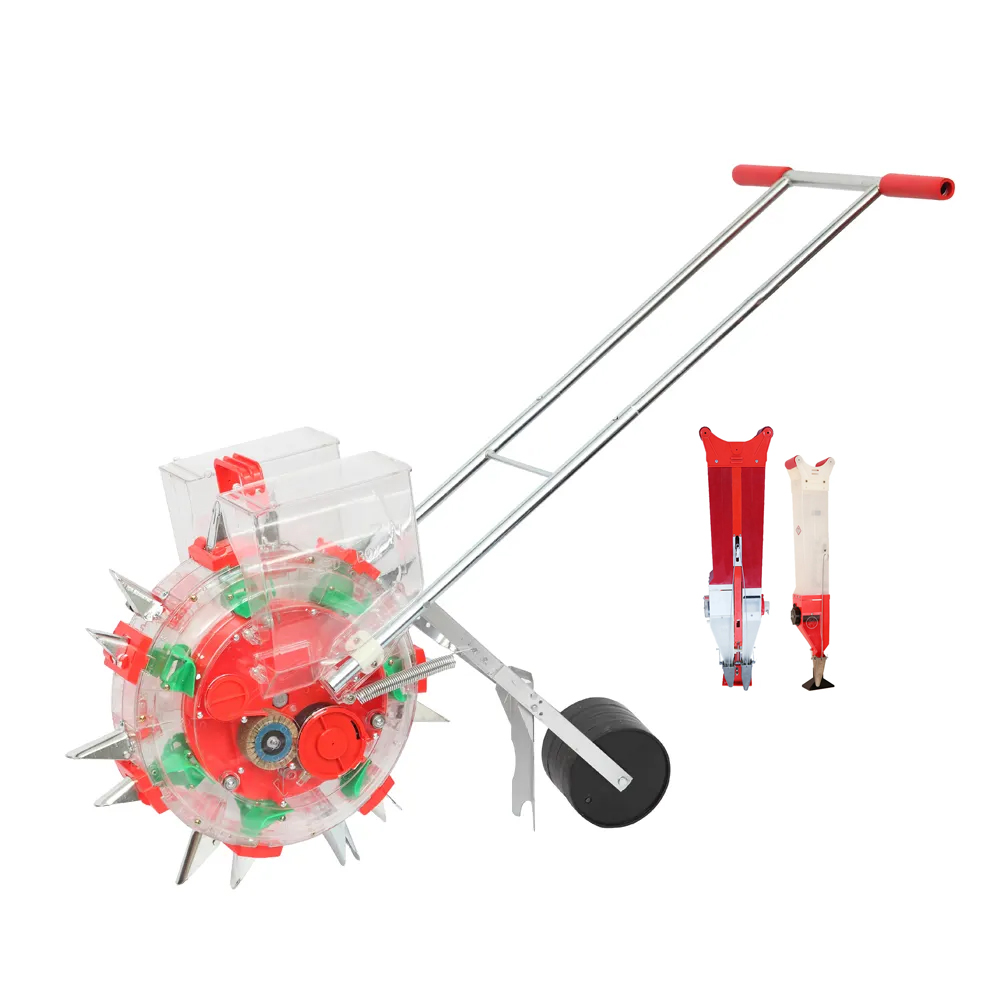
Hand-Pushed Corn Planters: Ideal for Small-Scale Farming
Hand-pushed corn planters are manual, compact devices that are ideal for small-scale farming operations. These planters are typically operated by one person, who pushes the machine across the field. Despite being less mechanized than other types of planters, hand-pushed planters offer several advantages in the right setting.
Advantages of Hand-Pushed Planters
- Cost-Effective: One of the most significant advantages of hand-pushed corn planters is their affordability. These machines are relatively inexpensive compared to larger, more automated options. As a result, they are a popular choice for smallholder farmers in developing regions where financial resources may be limited.
- Flexibility and Maneuverability: Hand-pushed planters are lightweight and easy to maneuver. They are ideal for small, irregularly shaped fields or areas with obstacles such as trees or irrigation ditches. This makes them a popular option in areas with uneven terrain or fields with complex layouts.
- Minimal Maintenance: With fewer moving parts and simpler construction, hand-pushed planters require less maintenance compared to larger, more sophisticated machinery. This makes them accessible for farmers who may not have access to specialized repair services or spare parts.
Global Use of Hand-Pushed Corn Planters
In regions where mechanized farming is less common, hand-pushed planters are the go-to tool for small-scale farmers. In countries across Asia, such as India, Bangladesh, and the Philippines, smallholder farmers often rely on these manual planters to sow their corn crops. In Africa, nations such as Ethiopia and Tanzania, where small-scale subsistence farming is prevalent, hand-pushed planters provide an affordable solution for farmers who are looking to maximize efficiency on limited land.
Hand-pushed planters are particularly common in areas where large-scale farming is not feasible due to land fragmentation, limited infrastructure, or economic barriers to purchasing larger machinery.
Tractor-Mounted Corn Planters: A Solution for Large-Scale Farming
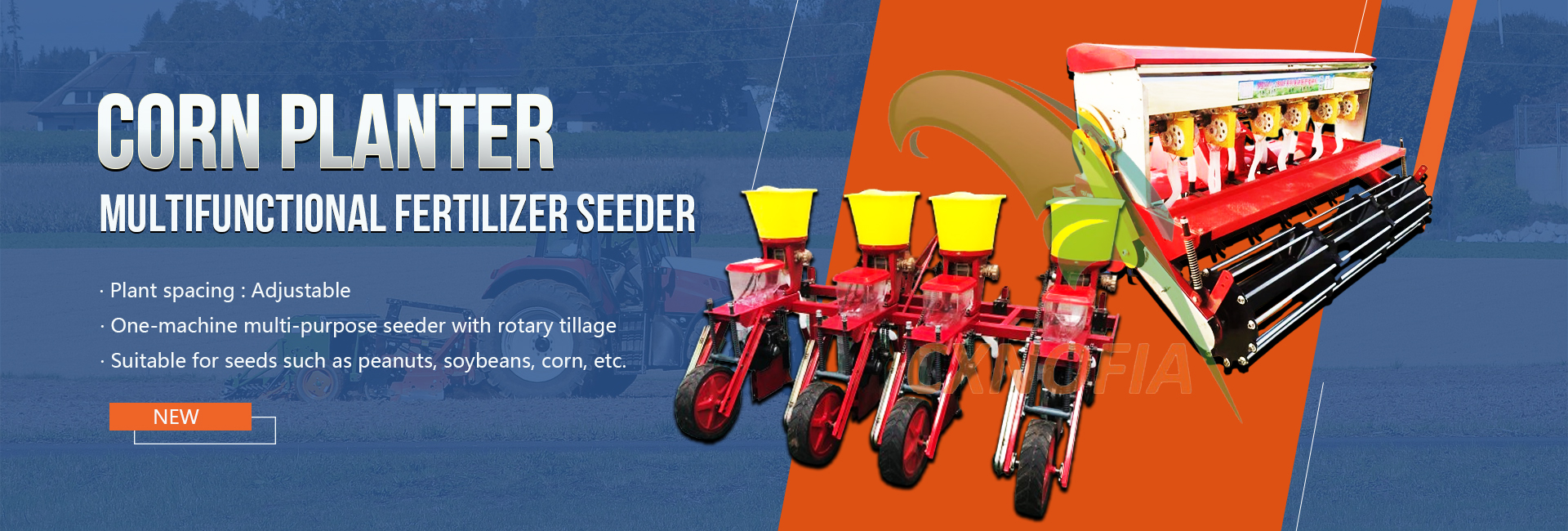
On the other hand, tractor-mounted corn planters are designed for larger-scale operations. These planters are attached to a tractor, allowing farmers to plant crops over a much larger area in a shorter amount of time. Tractor-mounted planters are highly automated and come with several advanced features that ensure precision and efficiency.
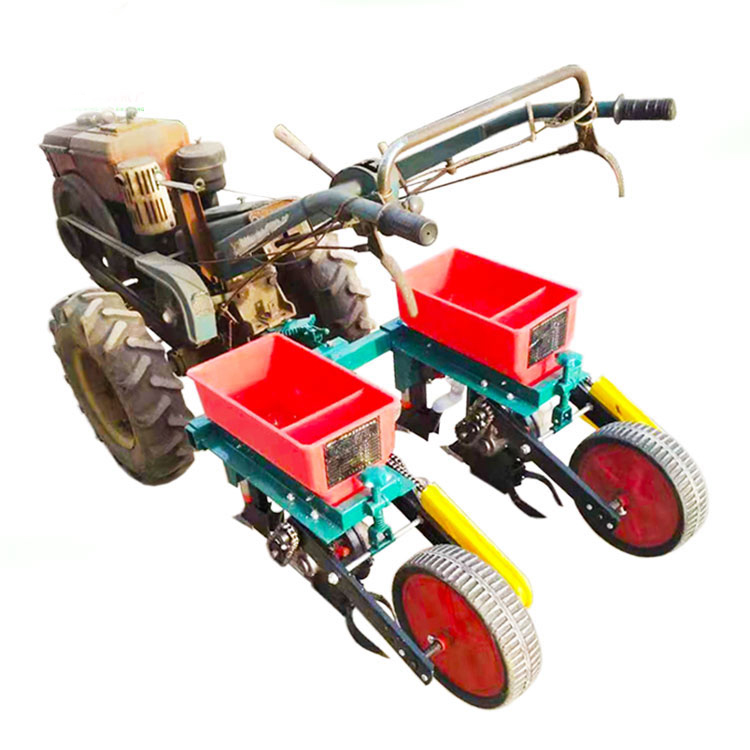
Advantages of Tractor-Mounted Planters
- Efficiency and Speed: Tractor-mounted corn planters can cover large areas of land in a relatively short time, significantly reducing the labor required for planting. This makes them ideal for commercial farming operations where speed and productivity are critical.
- Precision Planting: Modern tractor-mounted planters often come equipped with advanced technology such as GPS guidance, seed spacing control, and depth sensors. These features ensure that seeds are planted at the optimal depth and spacing, leading to more uniform growth and higher yields.
- Reduced Labor and Costs: With the automation and speed of tractor-mounted planters, the need for manual labor is drastically reduced. This can lead to cost savings, especially in countries with high labor costs. The reduced manpower requirement also makes it possible for farmers to focus on other tasks during the planting season.
Global Use of Tractor-Mounted Corn Planters
Tractor-mounted corn planters are widely used in countries with large-scale farming operations, particularly in North America, Europe, and parts of South America. In the United States, Canada, and Brazil, tractor-mounted planters are essential for the vast fields of corn that are grown for food, feed, and biofuel production. These countries have highly mechanized agricultural sectors, and tractor-mounted planters are a key piece of the farming machinery used to increase crop yields and reduce planting time.
In China, Russia, and parts of Australia, where large-scale corn production is also prevalent, tractor-mounted planters are integral to the success of the agriculture industry. The wide adoption of such planters has allowed farmers in these regions to maximize their crop production while keeping labor costs down.
Key Differences Between Hand-Pushed and Tractor-Mounted Planters
Farm Size and Type
- Hand-pushed planters are more suitable for small, family-run farms or fields with complex layouts, where tractors cannot easily access. They are best for small-scale production, often in regions with limited resources.
- Tractor-mounted planters, on the other hand, are designed for large-scale, commercial farming. These planters are more efficient on flat, expansive fields and are especially useful in countries with mechanized farming systems.
Economic Considerations
- Hand-pushed planters are a low-cost investment, making them ideal for farmers in low-income regions or those just starting out. They do not require expensive machinery or complex infrastructure.
- Tractor-mounted planters are significantly more expensive, not only due to the cost of the planter itself but also because they require a tractor. However, the efficiency and time savings they provide make them an essential tool for large farming operations.
Labor Requirements
- Hand-pushed planters demand more manual labor, which may be available in regions with abundant but low-cost labor forces.
- Tractor-mounted planters reduce the need for manual labor, which can be a major advantage in areas where labor shortages are an issue or where labor costs are high.
Conclusion
Both hand-pushed and tractor-mounted corn planters have distinct advantages and are suited to different types of farming environments. As global agriculture continues to evolve, the choice between these two types of planters often depends on farm size, economic factors, and available labor. While hand-pushed planters remain a vital tool for small-scale farmers in developing countries, tractor-mounted planters are increasingly becoming the norm in large-scale, mechanized farming systems. By understanding the advantages and limitations of each, farmers can choose the best equipment to meet their needs and contribute to the continued global demand for corn.
CXNOFIA is a well-known Tractor Implements supplier in China. Complete product range, quality guaranteed. Welcome to consult at any time!
How Serious Is A Wheel Hub Seal Leak?
Innovations in Corn Planters: Revolutionizing the Future of Farming
Related Article