Tractor 3C091-43070 Disc for Kubota
2026-02-25
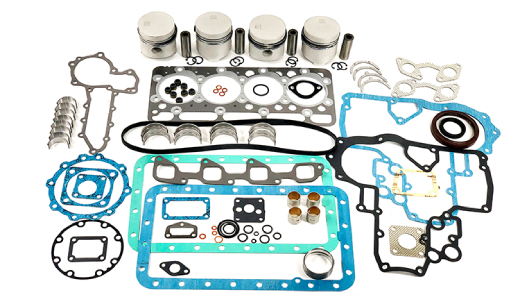
When maintenance teams search for "3C091-43070 disc for Kubota tractor," they often encounter confusing results mixing internal drivetrain parts with external soil-working implements. This terminology overlap creates real operational risks—installing the wrong component type can damage equipment or compromise field performance.
Chapter 1: Resolving Terminology Confusion – Two Distinct "Disc" Categories in Agricultural Machinery
The word "disc" creates persistent confusion in agricultural parts procurement.
Internal differential discs function within the tractor's drivetrain as friction plates inside limited-slip differential assemblies. These components enable torque redistribution when wheel slip occurs on slopes or wet terrain.
External disc harrows represent ground-engaging tillage implements featuring circular concave blades mounted on frames for soil preparation, residue incorporation, and seedbed finishing.
The Kubota part number 3C091-43070 belongs exclusively to the first category—a precision friction disc for front axle differentials—not a field-working implement.
Material composition differs fundamentally: differential discs use heat-treated alloy steel with calibrated friction coefficients, while tillage discs employ boron steel hardened for soil penetration resistance.
Failure to distinguish these categories leads to incorrect parts ordering, extended downtime, and potential drivetrain damage when external implement suppliers are mistakenly contacted for internal component needs.
Technical documentation consistently uses "disc" for internal friction components and "disk" for external implements in Kubota service manuals, though industry usage often blends these spellings.
Chapter 2: Engineering Analysis of Kubota 3C091-43070 Differential Friction Disc Specifications
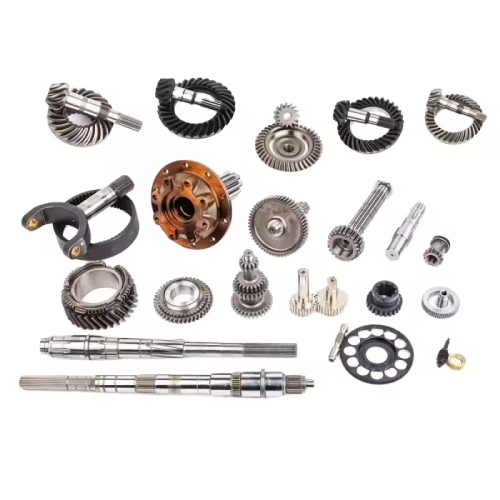
The 3C091-43070 serves as a critical wear component within Kubota M-Series limited-slip differential systems.
Primary application includes M7040, M8540, M9540, and M6040 tractors equipped with mechanical differential lock functionality operating between 70-95 horsepower ranges.
Operational principle relies on alternating steel and composite friction plates compressing under hydraulic pressure when wheel slip exceeds 15% differential rotation.
Critical dimensional tolerances maintain 0.002-inch flatness specifications across the friction surface to prevent uneven wear patterns that cause differential chatter.
Heat treatment processes achieve 45-48 HRC surface hardness while preserving core toughness to withstand repeated engagement cycles during demanding field operations.
Common failure indicators include inconsistent traction on moderate slopes, audible grinding during differential lock activation, and visible glazing on friction surfaces during 500-hour inspections.
Replacement intervals vary significantly based on operational patterns: tractors working predominantly on 15-degree+ slopes require inspection every 400 hours versus 800 hours for flat-land operations.
Installation demands precise torque sequencing on retaining bolts—under-torquing causes slippage while over-torquing induces warping, both compromising differential performance.
Specialized manufacturers like CXNOFIA maintain metallurgical testing protocols verifying friction coefficient consistency within ±3% of OEM specifications for components including the 3C091-43070 differential disc.
Field technicians report that pairing new 3C091-43070 discs with refreshed differential fluid containing limited-slip friction modifiers extends component life by approximately 35% compared to fluid-only changes.
Chapter 3: Technical Selection Framework for Garden Tractor Disk Implements and Farm Equipment Disc Attachments
Procuring external disc harrows requires systematic evaluation beyond basic width and blade count specifications.
Garden tractor disc for sale selections must match implement width to tractor capabilities: 25-35 HP machines effectively pull 48-54 inch implements, while 40-50 HP units handle 60-72 inch configurations without transmission strain.
Blade concavity depth determines soil penetration characteristics—5/8-inch concavity suits light tillage and seedbed finishing, while 1-inch concavity excels in heavy residue incorporation and compacted soil conditions.
Gang angle adjustability between 15-22 degrees provides operational flexibility: narrower angles reduce draft requirements for hardpan conditions, wider angles increase soil turnover in loamy soils.
Bearing quality directly impacts maintenance frequency—implementations featuring double lip seals with grease fittings withstand 500+ hours in abrasive conditions versus 150 hours for basic single-seal designs.
Notched versus smooth blade selection influences field outcomes: notched edges cut through crop residue effectively but create rougher seedbeds, while smooth blades produce finer tilth with 20% lower draft requirements.
Frame construction integrity proves critical under cyclic loading—continuous weld patterns along main beams resist fatigue cracking significantly better than intermittent spot welds during extended rocky field operations.
Transport clearance requirements often overlooked: compact disc harrows under 60 inches width typically lift fully on garden tractor three point hitches, while wider farm equipment disc models require partial transport positioning.
Seasonal storage protocols extend implement life—elevating disc gangs on blocks prevents bearing housing corrosion, while blade edge protection coatings reduce pitting during humid storage periods.
Operational testing before purchase should include gang rotation smoothness checks with implements raised off ground—any binding indicates bearing preload issues requiring immediate correction.
Chapter 4: Strategic Procurement Methodologies for Agricultural Disc Components in Global Supply Chains
Effective sourcing demands structured evaluation frameworks addressing technical authenticity and supply continuity.
Verification protocols for critical components like 3C091-43070 should require material certification documentation showing chemical composition matching SAE 8620 alloy steel specifications.
Dimensional validation against OEM prints using calibrated micrometers prevents installation of out-of-tolerance components that accelerate differential wear through uneven pressure distribution.
Supplier quality management system credentials—including ISO 9001 certification and agricultural equipment manufacturing experience—correlate strongly with component reliability metrics.
Lifecycle cost analysis reveals that premium 3C091-43070 discs costing 15% more initially often deliver 40% longer service intervals, reducing total ownership costs despite higher acquisition price.
Strategic inventory practices differentiate leading agricultural operations—maintaining two sets of critical wear components per equipment class prevents 72+ hour downtime during peak season failures.
Digital parts catalog integration with equipment management systems reduces misidentification errors by 68% according to agricultural logistics studies, particularly for components with dual terminology like disc/disk variants.
Regional supply chain diversification proves essential during global component shortages—establishing relationships with specialized manufacturers possessing vertical integration capabilities ensures continuity.
Technical support accessibility matters significantly: suppliers providing engineering consultation for complex installations like differential rebuilds reduce technician error rates by approximately 30%.
Field validation protocols should include controlled operational testing after component installation—monitoring differential engagement behavior during the first 10 operating hours identifies potential fitment issues before full workload application.
Documentation retention practices support warranty claims and failure analysis—photographing worn components before replacement and maintaining service records enables root cause determination for recurring issues.
Frequently Asked Questions
What functional difference exists between 3C091-43070 differential discs and garden tractor disk implements?
The 3C091-43070 operates internally within Kubota differentials as a friction transfer component, while garden tractor disk implements work externally for soil preparation. They share no mechanical interchangeability despite similar naming conventions.
How can procurement teams verify 3C091-43070 authenticity before purchase?
Request material certification showing SAE 8620 alloy composition, verify dimensional tolerances against Kubota service manual specifications, and confirm supplier quality management credentials before ordering critical drivetrain components.
What determines appropriate garden tractor disc for sale selection for compact equipment?
Match implement width to tractor horsepower—48-54 inch implements suit 25-35 HP machines, while exceeding these ratios causes transmission strain and incomplete soil penetration during operation.
How frequently should farm equipment disc bearings undergo maintenance inspection?
Inspect bearings every 25 operating hours for play or unusual noise; lubricate sealed units every 50 hours under normal conditions or every 20 hours in extremely dusty environments to prevent premature failure.
Why do some Kubota tractors require 3C091-43070 replacement more frequently than others?
Operational patterns dictate wear rates—tractors working predominantly on slopes exceeding 15 degrees or in wet clay conditions experience accelerated friction disc wear due to sustained differential engagement demands, requiring 400-hour inspection intervals versus standard 800-hour schedules.
Technical Insight into 3C091-43070 Disc
Why the 3C091-43070 Disk Matters in Tractor Systems
Related Article
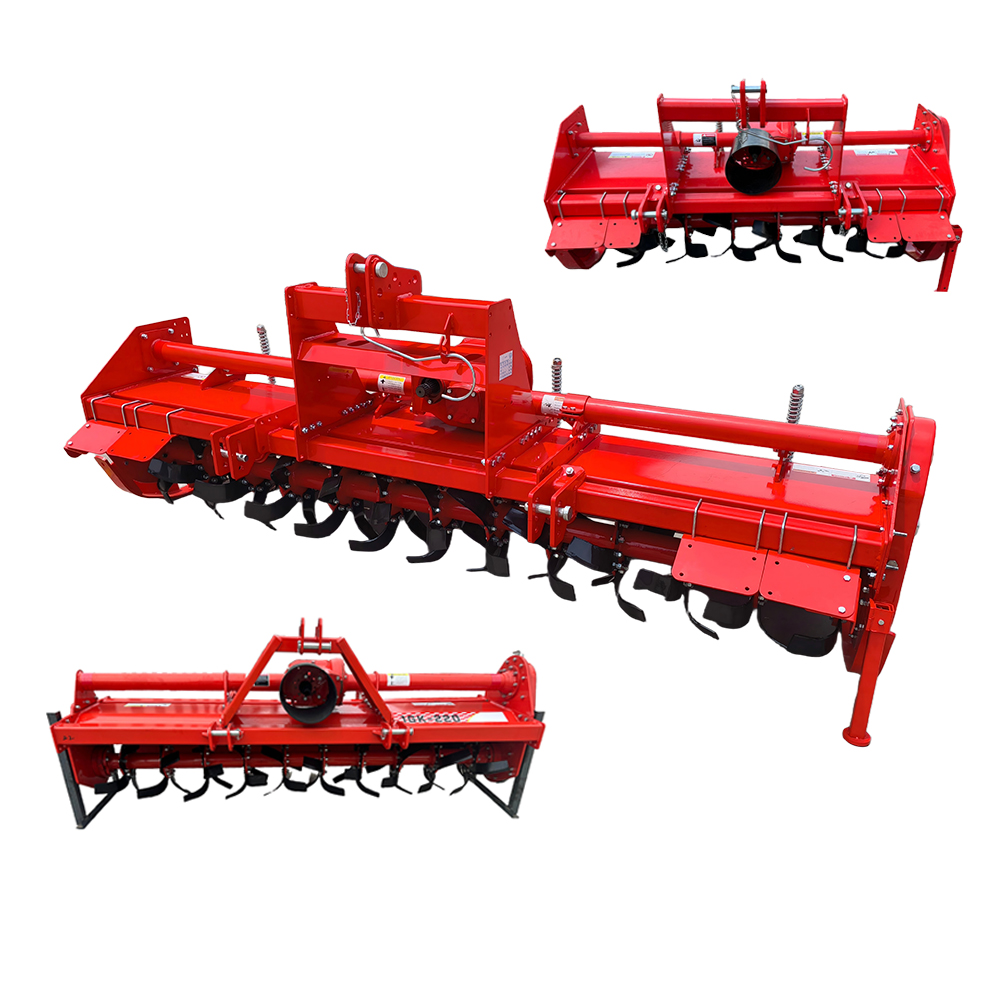
Explore MASCHIO-type rotary tillers from CXNOFIA, including 1MB, 1MC and 1GK series with 35–220 HP applications and 120–360 cm working widths.
MASCHIO-Type Rotary Tiller: 1MB, 1MC & 1GK Series Guide
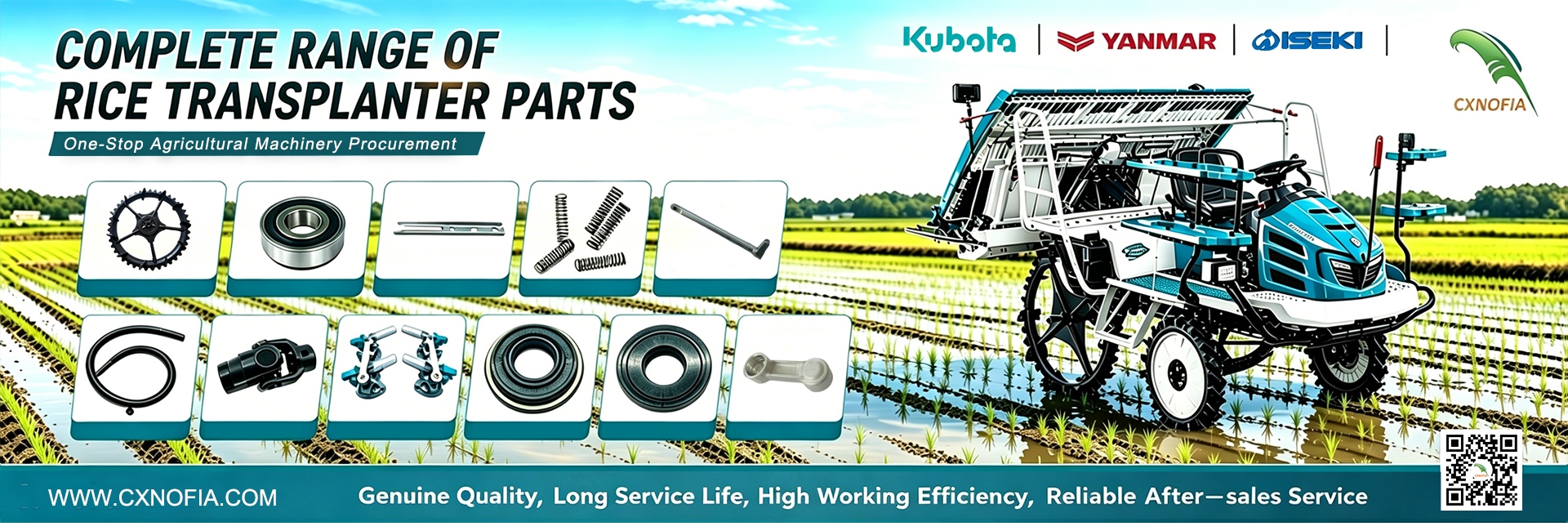
Explore the complete rice transplanter spare parts list for Kubota, Yanmar and ISEKI machines. Learn which replacement parts wear out most frequently, what dealers should keep in stock, and how CXNOFIA provides one-stop agricultural machinery spare parts solutions worldwide.
Complete Rice Transplanter Spare Parts List: Top Replacement Parts for Kubota, Yanmar & ISEKI Machines