Which Way Do Kingpin Seals Go?
2026-01-30
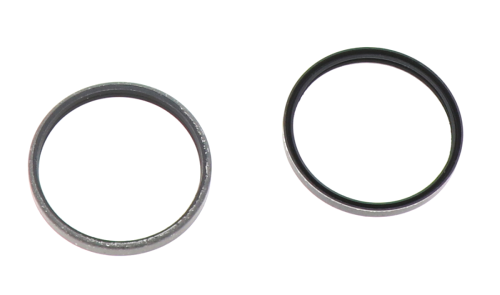
When working on front steer or agricultural axles — especially on iconic platforms like John Deere tractors — kingpin seals often emerge as one of those small parts with big consequences. A CXNOFIA RE271398 kingpin seal's purpose, orientation, and installation method not only determine the longevity of the steering assembly, but also influence maintenance costs, performance under load, and resistance to contaminants such as dirt, water, and abrasive debris.
Section I — Understanding Kingpin Seal Function and Why Orientation Matters
1. What Is a Kingpin Seal and Its Role in Axle Assemblies?
At its core, a king pin seal is a specialized lip seal positioned around the king pin — the pivoting shaft that connects the steering knuckle to the axle housing. Its fundamental purpose is to:
Retain lubricant (typically grease) inside the kingpin/bushing interface.
Exclude contaminants, including dust, moisture, and grit.
Maintain pressure differentials where grease gets pumped in from centralized grease fittings.
If this seal is installed incorrectly, it can allow grease to escape while simultaneously letting abrasive particles enter — accelerating wear on bushings and bearings. Once seal integrity fails, expensive steering knuckles or kingpins may deteriorate prematurely.
2. Kingpin Seal Anatomy: Multiple Lip Seals and Directional Design
Most kingpin seals are not symmetric. They have defined lip openings and faces that function as one way valves under grease pressure:
The lip opening or lip edge faces towards the location where lubricant is applied or expected.
The reverse side acts as a barrier against external contaminants.
Service documentation points out: in assemblies where grease is delivered from a centralized zerk fitting on the steering knuckle, the seal openings should face the axle eye — the direction from which grease enters the contact area — allowing grease to "flow outwards" into the sealing chamber while keeping dirt out.
Because most spindle bores for kingpins have both upper and lower seals, orientation matters on both.
3. Why Seal Orientation Changes Performance Under Real-World Conditions
Generic mechanical instincts might suggest that seals are simply pressed in with no regard to direction. However, in a dynamic assembly such as a steer axle:
The seal must allow grease pressure to exit into the bushing-pin interface during service greasing — this lubricates bearings and removes debris.
If installed backwards, grease becomes trapped or cannot reach necessary interfaces, and contaminants can ingress past the seal — causing binding, accelerated wear, corrosion, and costly rework.
In real maintenance scenarios, technicians have observed that backward seals result in stiff steering and spindles that do not move freely, a direct symptom of seal misorientation blocking grease flow.
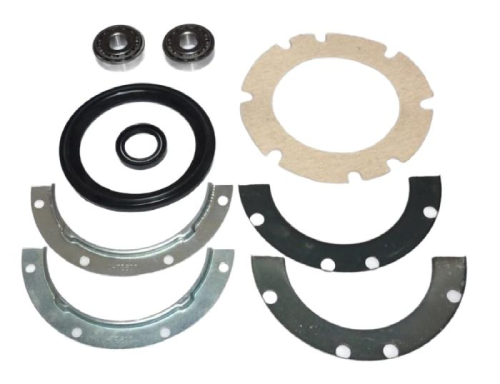
Section II — How to Identify the Correct Orientation for Kingpin Seal Installation
1. Visual Cues on the Seal
Most quality kingpin seals have subtle physical characteristics that hint at proper orientation:
Lip profiles: One side has a sharper, more flexible lip. This is the side that usually faces the grease source.
Beveled edges: Often intended to enter first toward the area where lubricant accumulates.
Markings or arrows on some seals can indicate grease direction (though not all seals have these).
For example, service guidance for many tractor steer axle assemblies notes that lip openings should face outward toward the axle eye, aligning with how grease fittings inject lubricant into the joint.
2. The “Axle Eye Facing” Rule for Lip Seals
Across multiple procedures documented by technical manuals in the axle service industry:
Two seals are typically used per kingpin assembly.
Each lip's opening should face the axle eye (i.e., the direction of grease ingress).
The logic is elemental. The lip, with its flexible edge, is designed to flex under grease pump pressure, allowing grease to pass into the joint while resisting reverse flow and debris entry.
3. Installation Depth and Flush Seating
Aside from orientation, the installed depth matters:
The seals should be driven into the bore until they sit flush with the bore's mounting surface. This ensures that the sealing lip engages properly with the pin or bushing.
Installing them too far out can prevent proper engagement; too far in can block grease channels or damage the lip.
Best practice is to use a seal driver that matches the bore diameter and to tap the seal evenly to avoid skewed seating.
Section III — Installing a Kingpin Seal Correctly: Step-by-Step Technical Guide
1. Preparation: Cleaning and Inspection
Before installing any king pin seals:
Remove old grease and contamination from the kingpin bore and knuckle.
Inspect for wear or corrosion. Rough or pitted surfaces compromise seal life.
Verify that the incoming grease path (zerk fittings, galleries) is clear.
A clean, dry interface ensures the new seal seats properly and performs as designed.
2. Positioning the Seal Lip Face
Once the kingpin assembly is disassembled:
Place each lip seal into its respective bore with the lip opening facing the axle eye, i.e., the direction where grease will enter.
There may be upper and lower bore seals depending on the assembly, so confirm placement for each.
This orientation ensures grease, when added under pressure, will be allowed to flow forward into the bushing area without forcing debris inward.
3. Using the Correct Tools
For mechanical integrity:
Use a dead-blow hammer or brass hammer to minimize shock damage.
Employ a seal driver sized to the bore diameter to distribute force evenly.
Avoid sharp punches or chisels that can nick the seal metal or rubber bead.
Drive the seal until flush with the bore surface. It should not protrude beyond the intended surface plane.
4. Greasing After Installation
Once both seals and any bushings are installed:
Grease the assembly via the grease fitting while moving the steering knuckle side-to-side.
Proper grease flow through the seals indicates correct orientation.
If the spindle binds or feels excessively stiff, re-evaluate seal orientation before completing assembly.
Grease not only lubricates but also works as a flushing medium that pushes out minor trapped debris — a function critically dependent on correct seal orientation.
Section IV — How RE271398 and Similar Front Axle Kingpin Seal Fit Into This Picture
1. The Role of RE271398 in John Deere Front Axles
The part number RE271398 — front axle kingpin seal — is specifically designed for many garden tractor parts for JD and other John Deere equipment. It matches OEM specifications for fit, materials, and sealing performance.
This seal performs the same basic functions described above: retaining grease, preventing contaminants, and ensuring smooth steering.
2. Why Precision Matters With OEM-Matched Seals Like RE271398
Generic or mismatched seals are more likely to fail prematurely. Correct dimensions and material resilience:
Ensure optimal lip contact with the kingpin surface.
Maintain flexibility in varying operating temperatures.
Withstand abrasive conditions typical of agricultural service.
Using a part like RE271398 as intended avoids guesswork that comes from poorly spec'd seals.
3. Compatible Fits and Application Examples
Based on parts catalogs, RE271398 can fit a wide range of models across series like 6000, 7000, and other JD tractors, performing reliably in steer axle kingpin sealing duties.
This breadth of compatibility underscores why understanding seal orientation and function is not just theoretical — it's practical and mission-critical for efficient tractor maintenance.
Frequently Asked Questions (FAQ)
Q1. Which way do king pin seals go — inward or outward?
A: In most front steer axle applications, the seal lip's opening faces outward toward the axle eye — in the direction where grease enters — allowing grease to flow through the seal while blocking contaminants.
Q2. Does it matter which side of the seal faces the grease?
A: Yes. The flexible lip side should face the grease source for proper flow and sealing. Incorrect orientation can prevent grease distribution and accelerate wear.
Q3. How many seals are used per kingpin assembly?
A: Typically two lip seals are used per kingpin — one in the upper bore and one in the lower bore — each oriented so that the lip opening faces the axle eye.
Q4. Can a king pin seal be installed too deep?
A: Yes. The seal should sit flush with the bore surface. Too far in can impede grease flow and damage the lip; too far out can compromise engagement.
Q5. Is RE271398 the correct seal for all John Deere tractors?
A: RE271398 fits many John Deere front axle steer applications, but always verify model fitment and part number against your machine's parts catalog.
China's Tractor Bearing Kit Landscape
Purpose of A Tractor Shim
Related Article
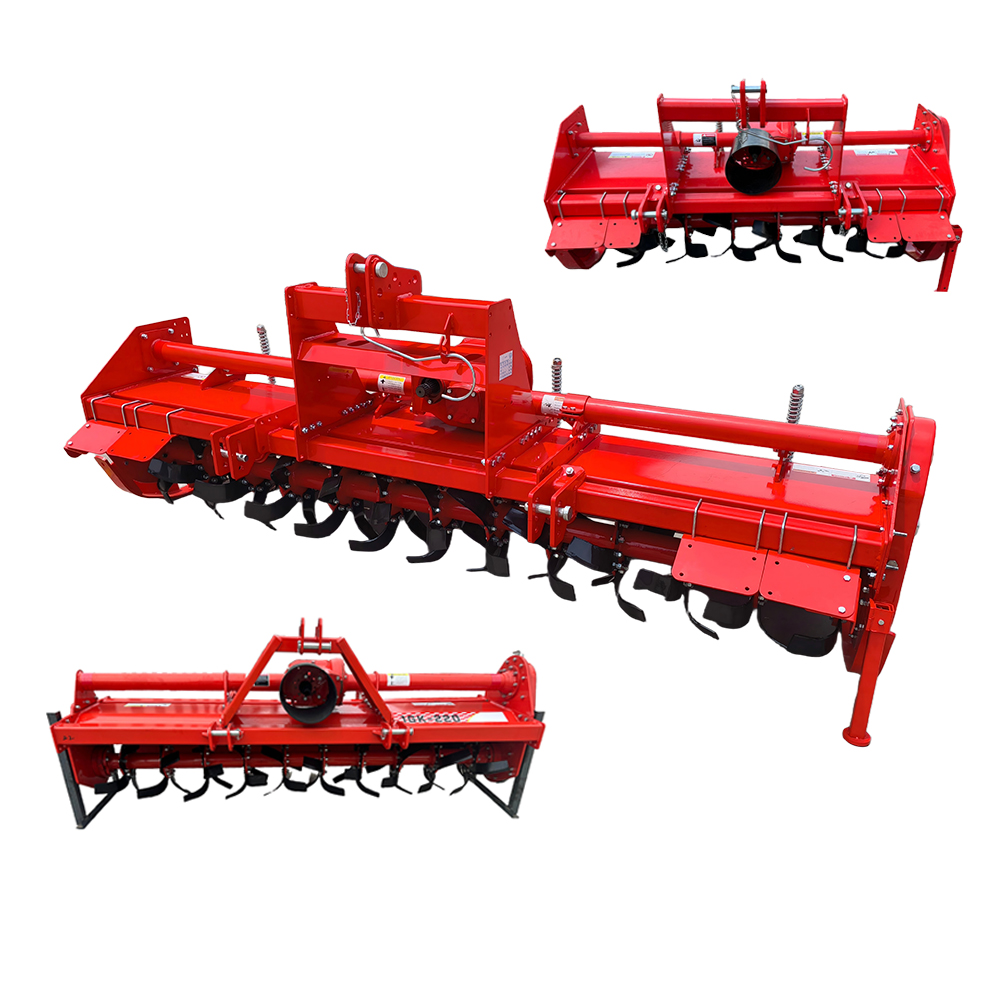
Explore MASCHIO-type rotary tillers from CXNOFIA, including 1MB, 1MC and 1GK series with 35–220 HP applications and 120–360 cm working widths.
MASCHIO-Type Rotary Tiller: 1MB, 1MC & 1GK Series Guide
Explore the complete rice transplanter spare parts list for Kubota, Yanmar and ISEKI machines. Learn which replacement parts wear out most frequently, what dealers should keep in stock, and how CXNOFIA provides one-stop agricultural machinery spare parts solutions worldwide.
Complete Rice Transplanter Spare Parts List: Top Replacement Parts for Kubota, Yanmar & ISEKI Machines