How to Choose the Right Corn Header for Your Combine Harvester
How to Choose the Right Corn Header for Your Combine Harvester
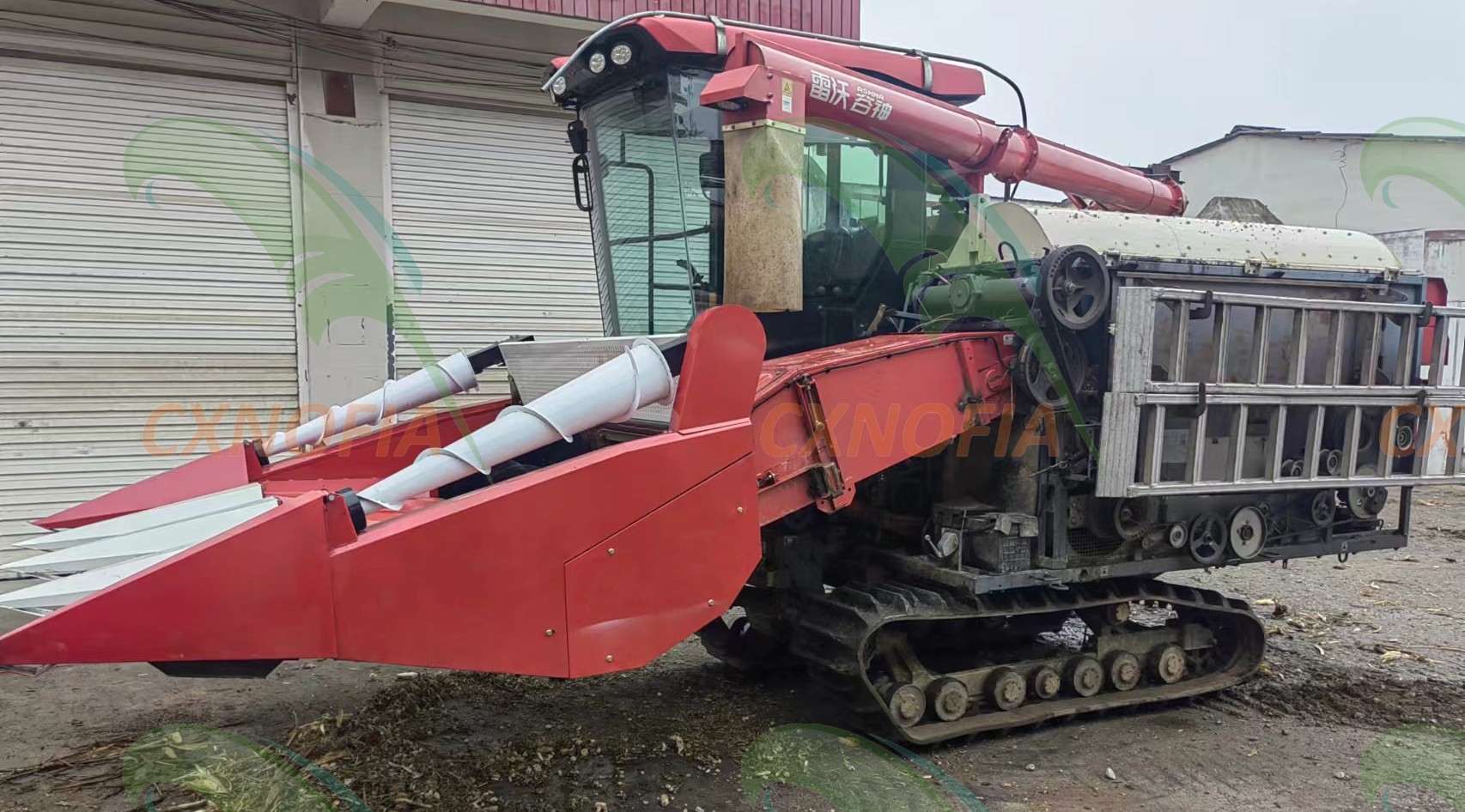
Choosing the right corn header is an important decision when preparing a combine harvester for maize harvesting. A suitable header can improve harvesting efficiency, reduce crop losses, and help ensure smooth operation in the field.
However, choosing a corn header is not simply about selecting the right number of rows. Buyers should also consider row spacing, combine harvester compatibility, working width, drive system, and field conditions.
In this guide, we explain the key factors to consider when choosing a corn header for your combine harvester.
1. What Is a Corn Header?
A corn header, also called a corn head or maize header, is a harvesting attachment designed to collect and process standing corn plants as they enter the combine harvester.
Unlike a standard grain header, a corn header is specifically designed to handle corn stalks and ears. The header guides the plants into the harvesting system while helping separate the ears from the stalks.
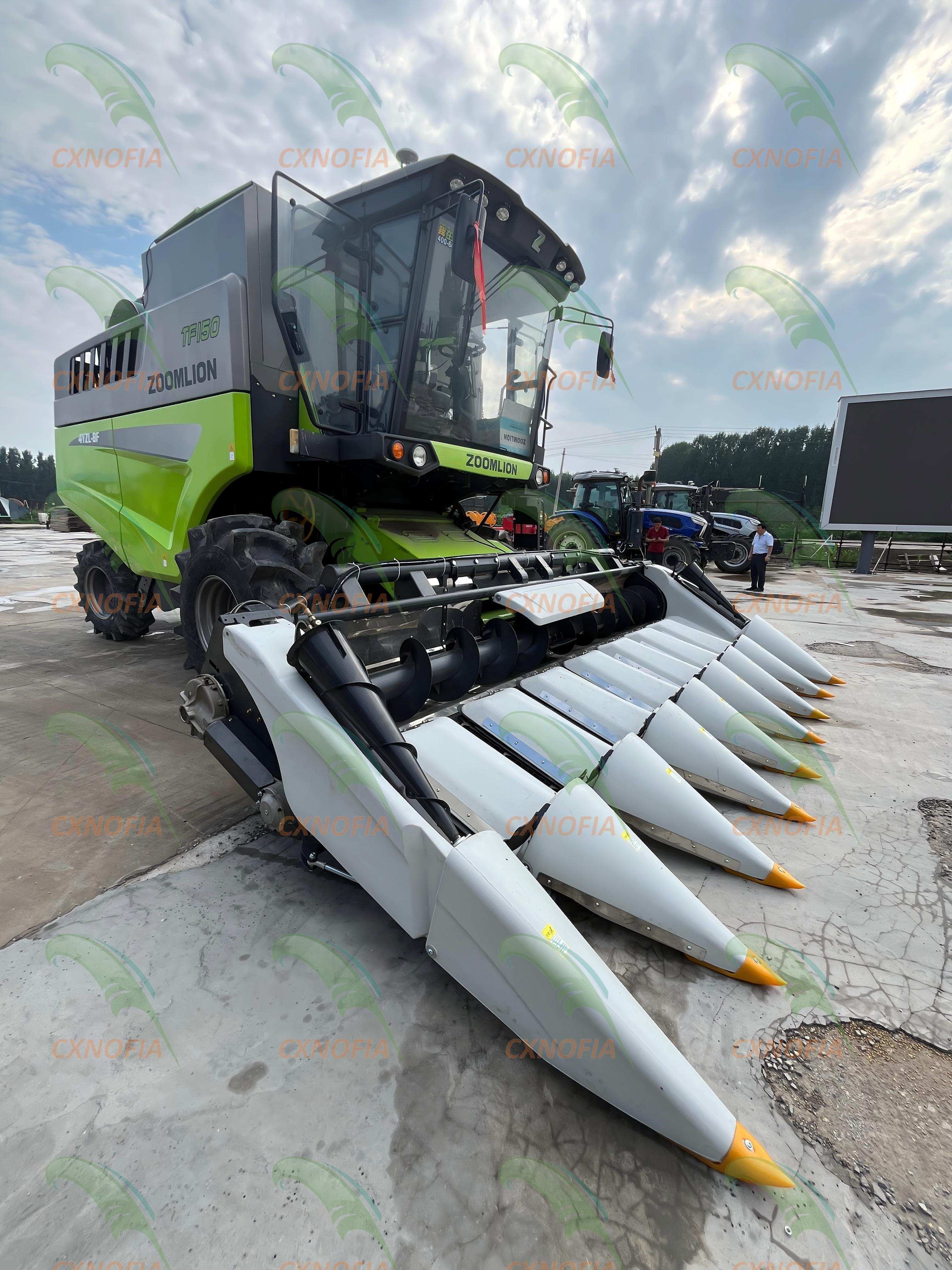
Corn headers are available in different configurations, including 2-row, 3-row, 4-row, 6-row, and larger models.
For small and medium-sized farms, a 4-row corn header can be a practical choice because it provides a balance between working width, harvesting capacity, and maneuverability.
2. Check Your Combine Harvester Before Buying
The first step is to identify the exact brand and model of your combine harvester.
A corn header is not automatically compatible with every combine. Before placing an order, buyers should check several important connection and operating specifications.
Key compatibility factors include:
- Combine harvester brand and model
- Header mounting dimensions
- Header connection/interface
- Drive system
- Hydraulic connections
- Electrical connections
- Working width
- Required power and transmission configuration
If you are unsure whether a particular corn header will fit your combine, provide the supplier with your combine model, photos of the header mounting area, and key dimensions before ordering.
This can help avoid compatibility problems after delivery.
3. Corn Header Row Spacing: How to Choose the Right Size?
Row spacing is one of the most important factors when selecting a corn header.
The row spacing of the header should match the actual planting pattern of the corn field as closely as possible.
For example, if corn is planted in relatively narrow rows, using a header designed for much wider spacing may result in poor crop alignment and increased harvesting losses.
Before choosing a header, measure the distance between the center lines of two adjacent corn rows in your field.
Common row spacing specifications may include:
- 50–55 cm
- 60–65 cm
- 70–75 cm
- Other customized spacing depending on the planting system
The exact available spacing depends on the header design and manufacturer, so buyers should always confirm the actual specification before purchase.
Why does row spacing matter?
Correct row spacing helps the gathering units align with the corn plants during harvesting.
If the spacing is unsuitable, it may lead to:
- Missed corn ears
- Increased grain loss
- Poor stalk feeding
- Uneven harvesting
- Reduced harvesting efficiency
Therefore, do not choose a corn header based only on the number of rows. Always check the row spacing as well.
4. How Many Rows Do You Need?
The number of rows determines the working width and harvesting capacity of the corn header.
4-Row Corn Header
A 4-row corn header is commonly considered a balanced option for small and medium-sized farms.
Potential advantages include:
- Good field maneuverability
- Moderate working width
- Suitable for relatively small fields
- Easier transportation and handling
- A good balance between capacity and investment
6-Row and Larger Corn Headers
Larger headers can cover more rows in a single pass and may provide higher harvesting capacity. However, they also require a suitable combine harvester, sufficient field space, and compatible transport and operating conditions.
The best choice therefore depends not only on the farm size, but also on the combine harvester capacity, field layout, planting pattern, and expected harvesting volume.
5. Consider the Working Width
The working width of a corn header is closely related to the number of rows and row spacing.
For example:
Working Width ≈ Number of Rows × Row Spacing
The actual working width depends on the specific header design, so this calculation should only be used as a basic reference.
When selecting a header, make sure its working width is appropriate for your combine harvester and field conditions.
A wider header is not always better. In smaller or irregularly shaped fields, a more compact header may provide better maneuverability and easier operation.
6. Consider Your Field and Corn Conditions
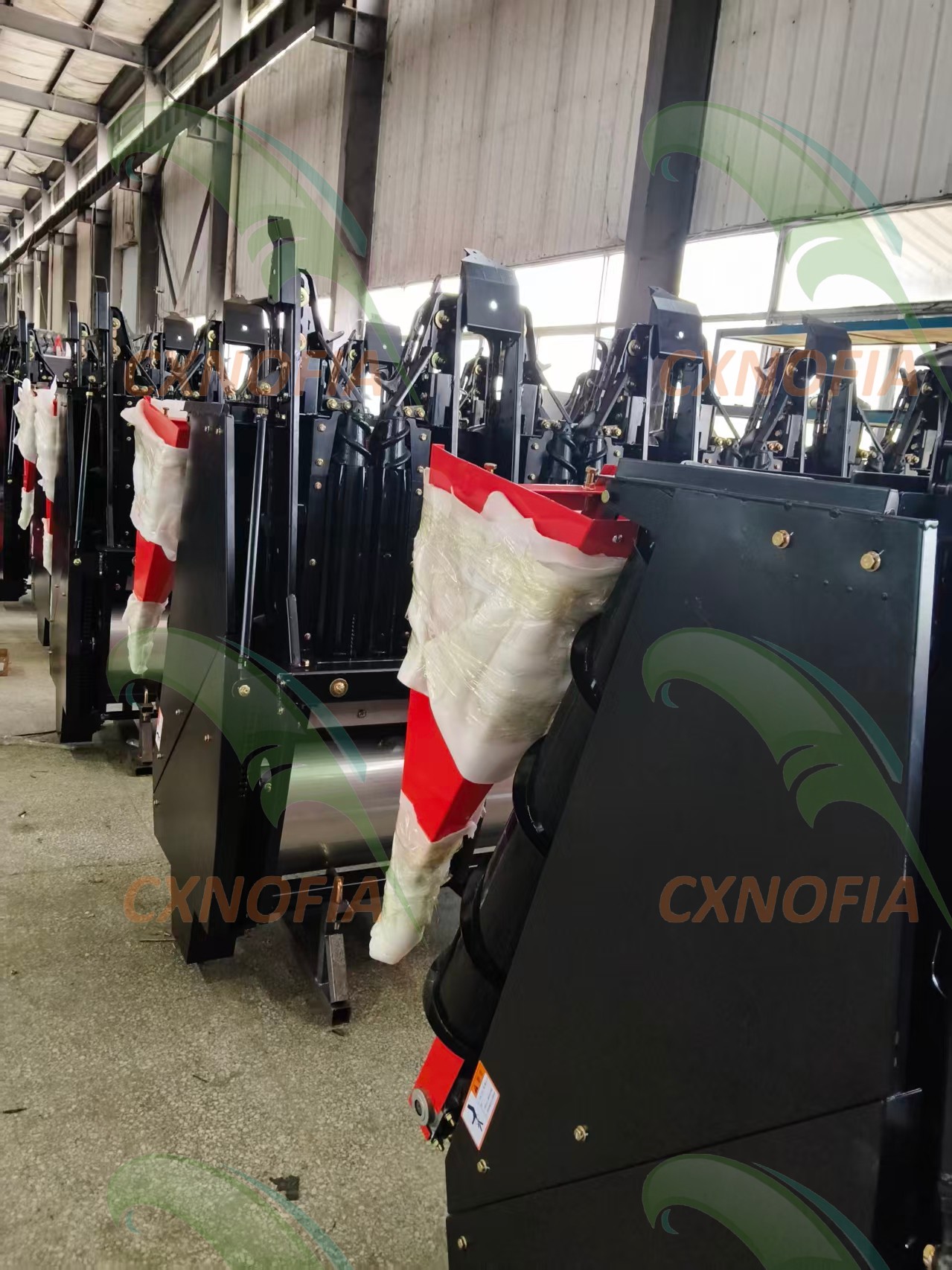
The same corn header may perform differently under different field conditions.
Before purchasing, consider:
Corn variety and plant characteristics
Corn height, stalk strength, ear position, and planting density can affect harvesting performance.
Field size and layout
Large, open fields may benefit from a wider header, while smaller or irregular fields may be better suited to a more compact configuration.
Terrain
If the machine will operate on uneven or sloped land, maneuverability and stability should be considered when choosing the header size.
Harvesting season and crop condition
Wet or heavily lodged corn may place greater demands on the header and combine harvesting system.
7. Common Mistakes When Choosing a Corn Header
Mistake 1: Choosing only by price
A low-cost header may not provide the correct compatibility or specifications for your combine.
Mistake 2: Ignoring row spacing
A 4-row header does not automatically fit every 4-row corn field. The actual row spacing must also be considered.
Mistake 3: Checking only the combine brand
The same brand may have multiple combine models with different header mounting and drive configurations.
Always confirm the exact combine model.
Mistake 4: Focusing only on working width
A wider header does not necessarily mean better harvesting performance. The header must match the combine's capacity and the field conditions.

8. Corn Header Buying Checklist
Before placing an order, we recommend confirming the following information:
Combine Harvester
- Brand
- Model
- Year, if relevant
- Header mounting/interface specifications
Corn Field
- Number of rows required
- Row spacing
- Corn variety and plant condition
- Field size and terrain
Corn Header
- Number of rows
- Working width
- Row spacing
- Drive system
- Hydraulic/electrical connections
- Transportation requirements
Providing these details to your supplier can make the matching process faster and reduce the risk of ordering an unsuitable header.
9. Looking for a 4-Row Corn Header?
For buyers looking for a 4-row corn header for a combine harvester, compatibility should always be confirmed before purchase.
At CXNOFIA, we can help buyers check the required specifications based on the combine harvester model and field requirements.
If you are looking for a 4-row corn header, maize header, or corn head, send us:
- Your combine harvester brand and model
- Required number of rows
- Corn row spacing
- Photos of your existing header or mounting interface, if available
- Your destination country
Our team can help you identify a suitable configuration and confirm compatibility before ordering.
The right corn header is not simply the one with the most rows or the lowest price — it is the one that matches your combine harvester, crop spacing, and actual field conditions.
How to Choose the Right Rubber Track for Your Bobcat Machine
Related Article