John Deere Unveils Next-Gen Autonomous Farming System at CES 2025: A Leap Forward in Smart Agriculture
Moline, IL – January 2025 – At CES 2025, John Deere made waves in the agricultural and construction industries by unveiling its second-generation autonomous farming technology, marking a significant evolution in precision agriculture. The new system, which builds upon the company’s 2022 debut, introduces enhanced AI-driven automation, expanded compatibility, and industry-first features designed to tackle global labor shortages and boost farming efficiency.
1. Breakthroughs in the 2nd-Gen Autonomous System
John Deere’s latest autonomous platform represents a quantum leap in agricultural automation, incorporating several key advancements:
Enhanced Vision & AI Processing
-
Expanded Camera Array: The new system features a 360-degree, 24-meter field of view (up from 16 meters in Gen 1), allowing machines to detect obstacles and terrain variations with unprecedented accuracy2.
-
NVIDIA Orin GPU: This high-performance processor enables real-time AI decision-making, classifying objects in milliseconds for safer navigation in complex environments like orchards and construction sites2.
-
40% Speed Boost: Thanks to improved computing power and sensor fusion, autonomous tractors can now operate 40% faster, significantly increasing field productivity2.
Legacy Equipment Compatibility
-
Recognizing the long lifecycle of farming equipment, John Deere announced retrofit kits that will allow older tractors (as early as 2020 models) to integrate the new autonomous features. Installation takes as little as 8 hours for newer models, ensuring minimal downtime2.
2. Four New Autonomous Machines for Diverse Industries
John Deere showcased four specialized autonomous vehicles, each tailored to different sectors:
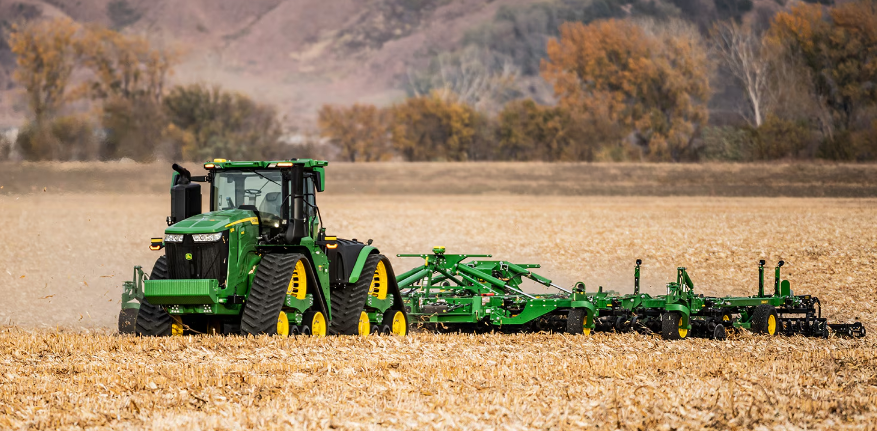
1. 9RX Large-Scale Farming Tractor
-
Designed for fully autonomous planting, tilling, and harvesting in open fields.
-
Features dual passive-cooled Vision Processing Units (VPUs) to handle 16 high-resolution cameras for real-time terrain mapping2.
2. 5ML Orchard Sprayer Tractor
-
Optimized for narrow orchard rows, where GPS signals are often obstructed by dense tree canopies.
-
Integrates LiDAR sensors alongside cameras to dynamically adjust path planning, avoiding collisions with trees while optimizing spray patterns2.
3. 460 P-Tier Autonomous Hauler
-
The first self-driving articulated dump truck (ADT) from John Deere, targeting quarry and construction sites.
-
Uses the same vision-based autonomy stack as agricultural machines but adapted for rugged terrain2.
4. Electric Commercial Mower
-
A zero-emission, battery-powered mower for golf courses and parks.
-
Equipped with 8 cameras, 1 VPU, and dual GPS receivers, it can operate autonomously or be manually controlled2.
3. Commercialization & Industry Impact
Pilot Testing & Market Rollout
-
John Deere plans limited pilot deployments in 2025, working with select farming and construction partners to refine the technology before a broader commercial launch2.
-
The company aims to fully automate corn and soybean farming in the U.S. by 2030, leveraging AI-driven decision-making for planting, fertilizing, and harvesting2.
Addressing Labor Shortages
-
With 88% of construction and landscaping firms struggling to find skilled workers, autonomous solutions could fill critical gaps9.
-
Farmers can remotely monitor multiple machines via mobile apps, reducing the need for on-site operators2.
Controversies & Challenges
-
Right-to-Repair Concerns: John Deere has faced criticism for restricting independent repairs, and the new system’s closed-source software remains a point of contention9.
-
Regulatory Hurdles: While autonomous tractors are technically ready, government approvals for fully unmanned operation remain pending2.
4. The Future of Autonomous Agriculture
John Deere’s latest innovations underscore a broader shift toward AI-driven, data-centric farming:
-
Precision Agriculture: Real-time soil and crop analysis will enable hyper-localized fertilizer and pesticide application, reducing waste and environmental impact10.
-
Connectivity Solutions: To ensure uninterrupted operation in rural areas, John Deere has partnered with SpaceX to integrate Starlink satellite internet into its machines, enabling cloud-based AI analytics even in low-coverage zones56.
-
Sustainability Goals: The move toward electric and autonomous machinery aligns with global efforts to reduce carbon emissions in agriculture2.
Conclusion: A Transformative Step for Global Farming
John Deere’s second-generation autonomous system is more than just an incremental upgrade—it represents a fundamental rethinking of how farms and construction sites operate. By combining AI, robotics, and satellite connectivity, the company is positioning itself at the forefront of smart agriculture, helping farmers meet rising global food demands while mitigating labor shortages.
However, challenges remain, from regulatory approvals to farmer adoption rates. As Jahmy Hindman, John Deere’s CTO, noted: "Autonomy isn’t just about replacing labor—it’s about redefining efficiency in ways we’re only beginning to understand."
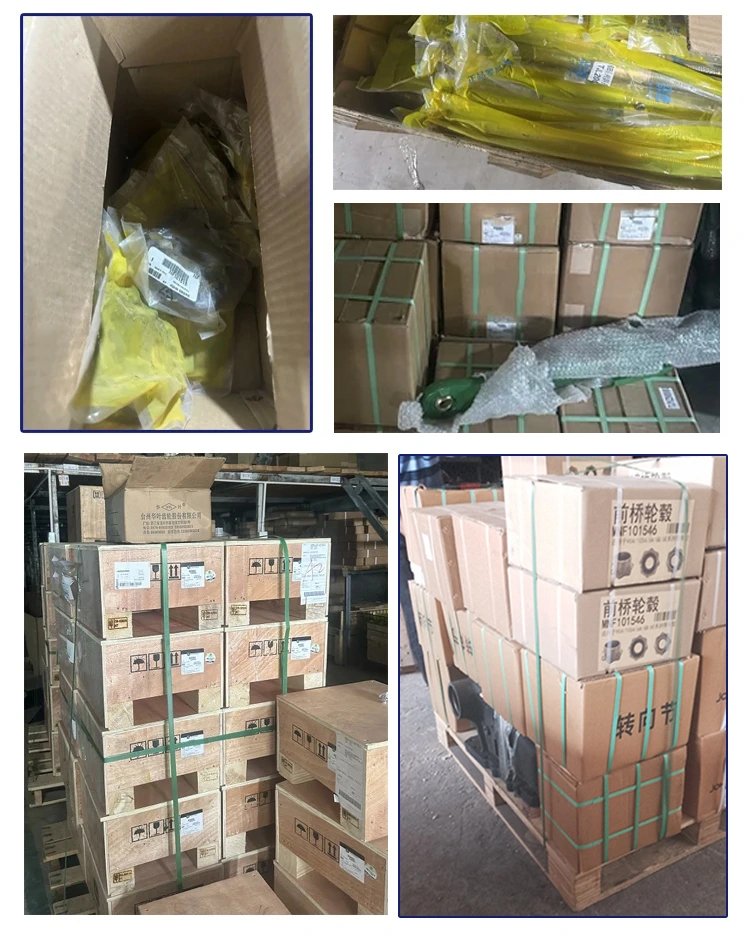
CXNOFIA is a well-known tractor parts supplier in China. Complete product range, quality guaranteed. Welcome to consult at any time!
Title: Boosting Farm Efficiency: A Closer Look at Common Tractor Attachments
John Deere Unveils New Electric Agricultural Equipment, Paving the Way for a Greener Future
Related Article