How Many Clutches Does A Tractor Have
As an indispensable mechanical equipment in agricultural production, tractors’ design and functions have always been the focus of farmers and engineers. In recent years, there has been an increasing focus on technology and performance improvements in tractors, and one of the topics that has attracted much attention is how many clutches they have. The number of clutches on tractors is an important factor affecting their functionality and operational flexibility. This article will provide an in-depth answer to the question "How many clutches do tractors have?" and explore the role and development trends of clutches in tractor design.
The Basic Functions of Clutches
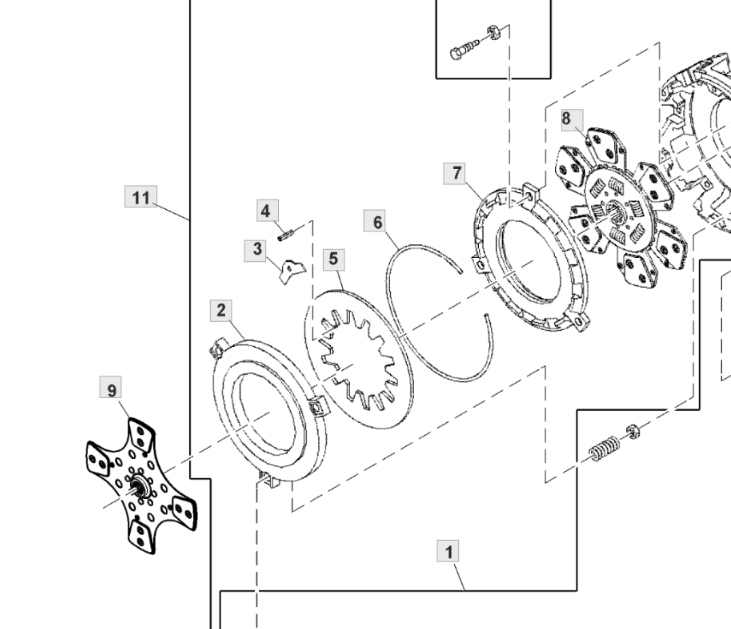
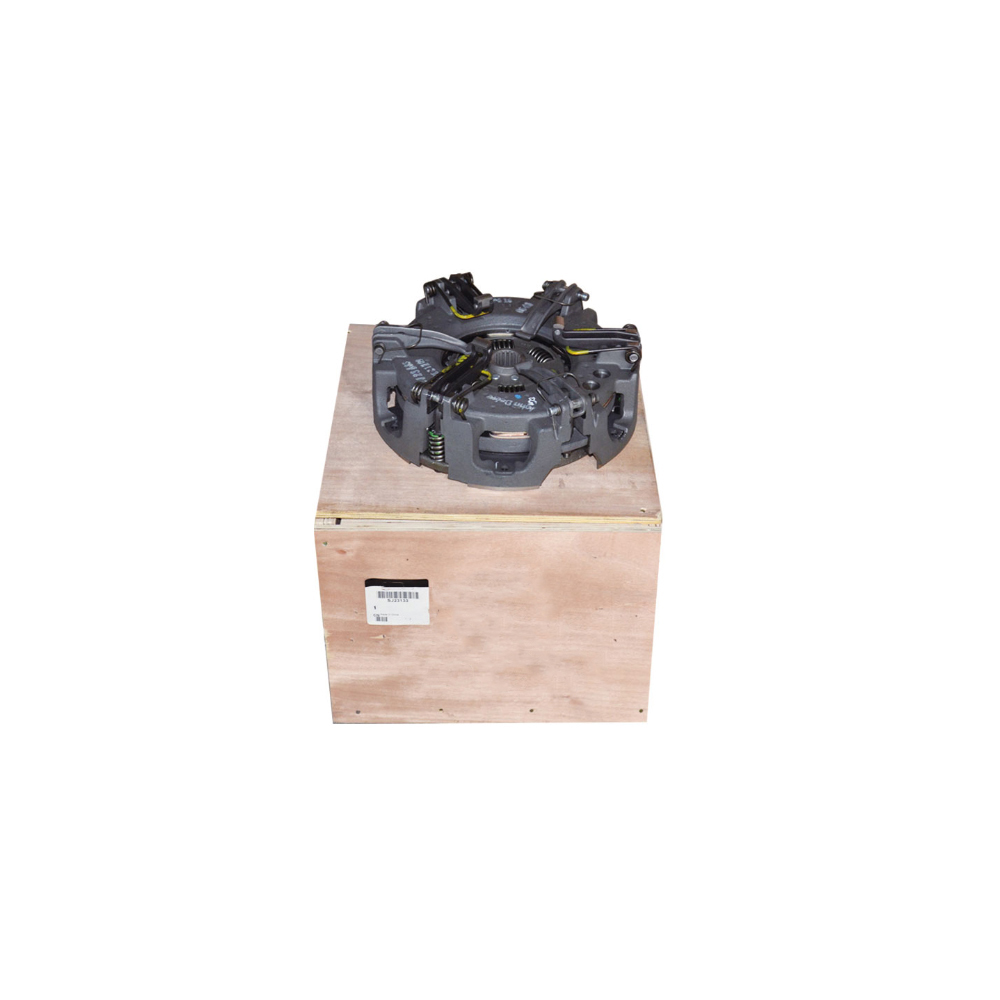
A clutch is a device that connects and disconnects the tractor engine from the transmission gears and drive wheels. It transmits power through friction between driving members and driven members. The internal combustion engine used in a tractor must be cranked manually or by a special starting mechanism.Simply put, the clutch helps tractors achieve flexible power control under different working conditions.
The clutch serves several important functions:
- Cranking the Engine: The clutch allows the engine to be cranked manually or by a special starting mechanism. It disconnects the engine from the rest of the transmission unit during cranking, making it easier to start the engine.
- Changing Gears: The clutch permits changing the transmission gears to secure different traveling speeds.
- Stopping the Belt Pulley: The clutch allows stopping the belt pulley without having to stop the engine.
Types Of Clutches
Clutches are mainly of three types:
- Friction Clutch
- Dog Clutch
- Fluid Coupling
The friction clutch is the most popular in four-wheel tractors. Fluid coupling is also used in some tractors these days. Dog clutches are mostly used in power tillers.
Friction clutches may be subdivided into two classes:
- Disc/Plate Clutch a. Single Plate Clutch or Single Disc Clutch b. Multiple Plate Clutch or Multiple Disc Clutch
- Cone Clutch
Friction clutches are most commonly used because of the following advantages:
- Slips during engagement help the drive to pick up and accelerate the load with minimum shock.
- They do not need to be unloaded before engagement.
- These can be used at high engagement speeds.
- Slip under momentary shock loads provides cushioning.
The Main Features of Fluid Coupling
- Absorption of shock and vibration
- Smooth starting
- Easy operation
The Clutch Design Of Traditional Tractors
Traditional tractors are usually equipped with one or two clutches, mainly used to control the start stop and speed adjustment of the vehicle's drive wheels. This design is simple and direct, suitable for basic agricultural operations and land cultivation.
Detailed Explanation of Tractor Double Acting Clutch
What is a Tractor Double Acting Clutch?
A dual acting clutch in a tractor refers to a clutch system that has two functions during driving operations. It consists of two parts: the main clutch and the slave clutch. The main clutch is used for shifting gears and starting the tractor, while the slave clutch is used to drive external hydraulic pumps and other accessories.
The Function of Tractor Double Acting Clutch
1. The Function of the Main Clutch
The main clutch of a tractor is located between the engine and transmission. It is used to shift gears and start the tractor. When the accelerator pedal is not pressed, the clutch is engaged, preventing engine power from being transmitted to the gearbox. When the accelerator pedal is pressed, the clutch disengages, allowing engine power to be transmitted to the gearbox, thus driving the tractor.
2. The Function of the Slave Clutch
The slave clutch in a tractor is located in the hydraulic system and is used to drive external hydraulic pumps and other accessories. When the tractor needs to perform loading and unloading operations or use an external hydraulic pump, the slave clutch engages to transfer engine power to the hydraulic equipment, enabling multifunctional operation.
Advantages of Tractor Double Acting Clutches
1. Multifunctional Operation
The dual action clutch enables the tractor to start, turn, drive, and perform other operations, as well as drive external hydraulic pumps and other accessories, achieving multifunctional operation.
2. Simple and Convenient Operation
Due to its design, the dual acting clutch has two functions, making operation simpler and more convenient.
3. High Reliability
The dual acting clutch is made from high-quality materials and uses advanced manufacturing technology, resulting in high reliability during use.
The dual acting clutch in a tractor provides two clutch functions, enabling multifunctional operation, simple and convenient operation, and high reliability.
The Principle and Advantages of Tractor Dual Clutch Transmission
Traditional tractors use a single clutch system to control transmission and shifting. In contrast, the dual clutch system uses one clutch for power output and another for switching between different gears. This technology improves the transmission efficiency and economy of tractors.
The working principle of a tractor dual clutch system is similar to that of a car's dual clutch system. When one clutch is engaged, the other can shift gears without interrupting the transmission. This reduces shifting time and friction, improving the tractor's stability and efficiency.
Tractor Models Suitable for Dual Clutch Transmission
Many tractor manufacturers are adopting dual clutch technology. Types of tractors suitable for dual clutch technology include agricultural tractors, wheeled tractors, and suspended tractors. Dual clutch technology can greatly improve the efficiency and economy of these tractors.
Dual clutch technology is one of the most common technologies in modern tractors. It improves transmission efficiency and economy, and reduces driver labor intensity. Therefore, when choosing a tractor, it is worth considering whether it has dual clutch technology.
The Diversification Trend Of Modern Tractor Clutches
With the advancement of agricultural technology and the continuous pursuit of efficiency by farmers, the design of modern tractors has evolved towards diversified clutches. Modern tractors may be equipped with up to five or even more clutches, each with specific functions.
1.Drive Wheel Clutch: Controls the start, stop, and speed adjustment of the drive wheels, which is a basic clutch function.
2.Power Output Adjustment Clutch: Used to adjust the power output of the engine, allowing the tractor to maintain appropriate power output under different loads.
3.Driving Clutch: Specifically used for forward, reverse, and brake control, enhancing the flexibility of tractor operation in narrow spaces.
4.Power Take-Off Clutch: Controls the start, stop, and speed adjustment of the power take-off, used to connect external agricultural machinery equipment for operation.
5.High and Low Speed Clutch: Adjusts the driving speed of the tractor to adapt to different terrains and working conditions.
The Advantages and Challenges of Multi-Clutch Design
The multi-clutch design enables tractors to respond more flexibly to different operational needs in complex agricultural production environments. For example, farmers can precisely adjust the power output and speed of tractors according to specific task requirements, improving work efficiency and quality.
However, the multi-clutch design also brings some challenges. The cost of maintenance and upkeep may increase as each clutch requires regular inspection and repair, and the operator needs a certain level of technical and operational expertise to correctly use and maintain these systems.
Future Development Trends
With the continuous progress of agricultural technology and changes in user needs, future tractor designs may be further optimized and innovated. We may see the integration of more intelligent and automated clutch systems, as well as more energy-efficient and environmentally friendly design concepts.
Conclusion
In summary, the answer to the question "How many clutches does a tractor have?" is not fixed and depends on the tractor's model, design, and manufacturer's technical choices. The diversified application of clutches in tractor design not only enhances the operational flexibility and efficiency of tractors, but also reflects the trend of continuous development and optimization of agricultural machinery technology.
Explore our extensive selection of tractor parts for Kubota and other brands, including a full range of clutches. CXNOFIA is a well-known tractor parts supplier in China. Complete product range, quality guaranteed.
What Is A Gear Pump Used In A Tractor
Understanding Different Types Of Hydraulic Pumps
Related Article